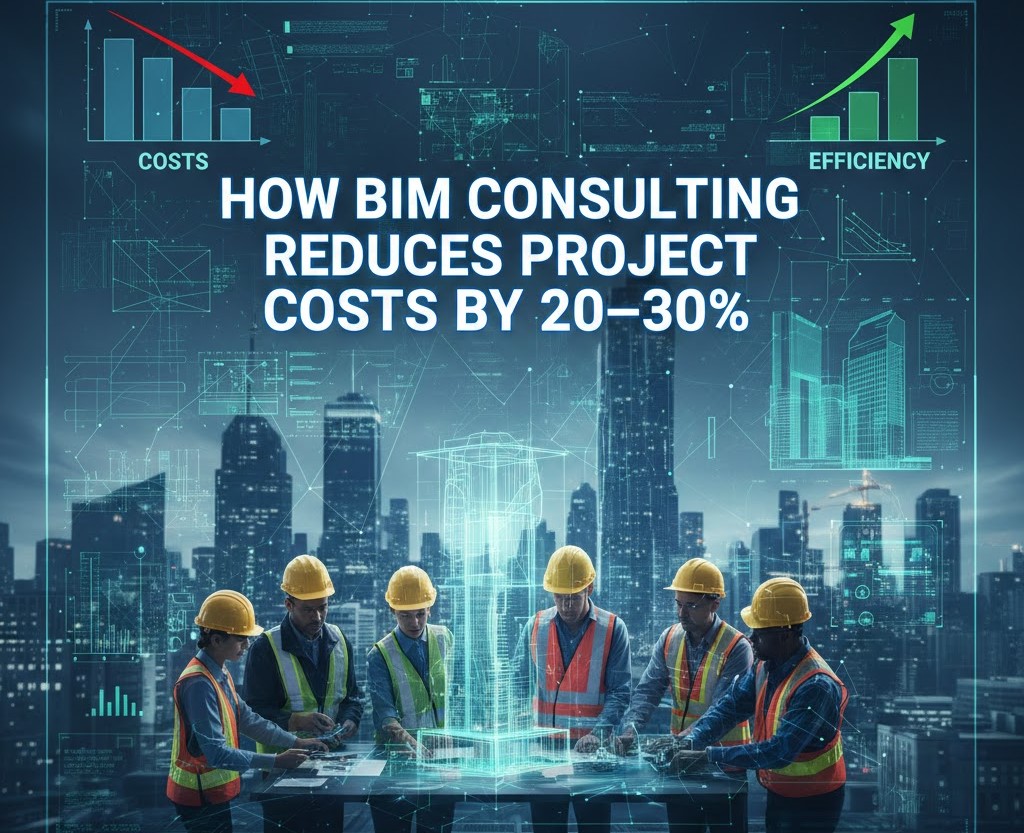
In a business where margins are narrow and project complexity is increasing, cost minimization without compromising quality is becoming the leading concern of architecture, engineering, and construction (AEC) companies. Projects of all magnitudes are plagued by budget overruns, rework, delays, and coordination failures. This is where BIM consulting has come in as a potent cost-controlling technique. When properly utilized, BIM consulting will always make projects save 20-30 percent in total cost, not by cutting corners but by making decisions smarter, more well-coordinated, and informed by the available data.
This blog elaborates on the manner in which BIM consulting is able to provide these types of savings, the sources of the savings, and why firms that invest in BIM expertise will achieve a quantifiable financial benefit.
Cost Leakage in Traditional Project Delivery
To analyze the benefits of cost savings by BIM consulting, it is necessary to identify the areas in which money is usually lost. Traditional workflows used to have project information that is fragmented in drawings, spreadsheets, emails, and unlinked software platforms. The design decisions are made in solitude,, and coordination occurs late, sometimes when the construction is underway.
Typical cost overrun causes include deficient design documentation, subsequent design changes, inaccurate quantity takeoffs, field conflicts of the systems, inefficient scheduling, and bad communication among the stakeholders. The combination of each of these problems creates change orders, delays, and inefficiencies in the labor that greatly swell the project budgets.
The solutions that BIM consulting provides to these weaknesses are the structured processes, common data environment, and coordinated digital models that bring together all project participants from the very first steps.
Early Design Optimization Eliminates Expensive Changes
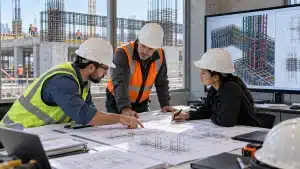
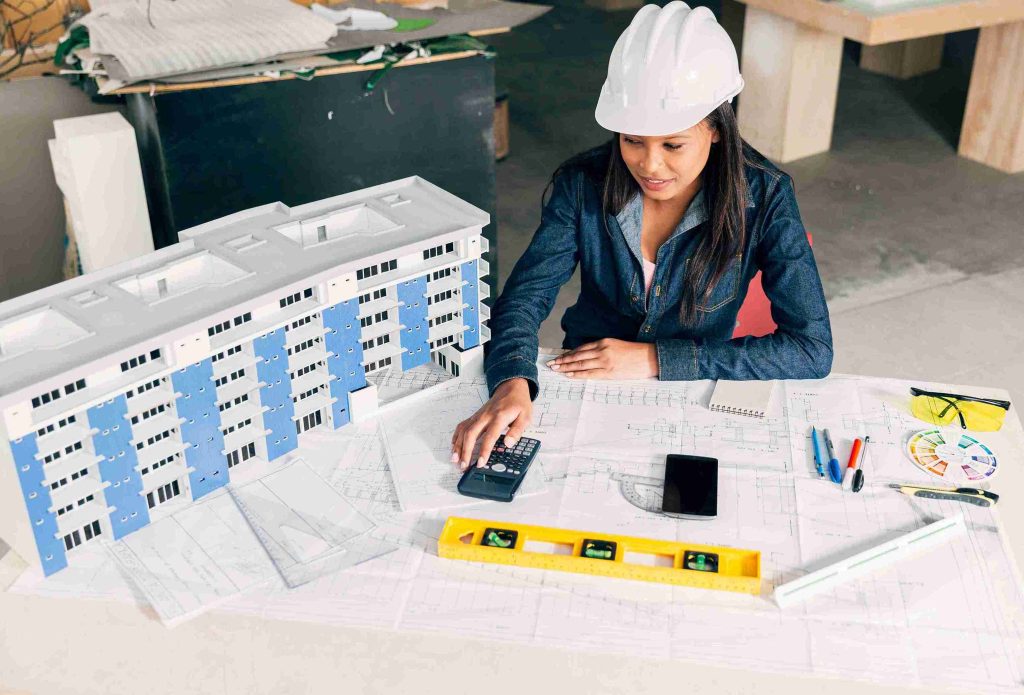
Optimization of design at an early design stage is one of the most important cost-saving advantages of BIM consulting. BIM consultants assist project teams with the creation of coordinated models within concept and schematic design, whereby stakeholders are able to imagine and test decisions in the design before finalizing construction documents.
Design problems that are discovered early can be resolved at a very minimal cost. In a digital model, a duct rerouted is free, whereas in construction, a duct rerouting would cost thousands. BIM consultants support design reviews and options and performance simulation, which minimize uncertainty and eliminate redesigning at a later stage.
The early alignment of architectural, structural, and MEP systems through BIM consulting can significantly decrease the quantity of downstream changes that usually increase the costs.
Clash Detection Prevents Costly Rework
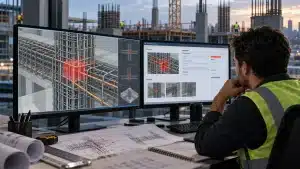
One of the biggest causes of budget overruns in construction is rework. A structured workflow of clash detection and coordination systems is introduced by BIM consulting and results in the identification of conflicts between systems well into the site.
BIM consultants do not find overlaps between ductwork and beams when installing them; they conduct coordinated checks with industry-standard tools. The processes expose spatial, clearance, and system conflicts at an early phase when they are simple and cheap to repair.
Cost savings from clash detection include:
- Reduced material waste
- Fewer labor hours spent on rework
- Elimination of emergency design fixes
- Fewer construction delays
Studies consistently show that projects with robust BIM coordination experience significantly fewer RFIs and change orders, directly contributing to the 20–30% cost reduction.
Accurate Quantity Takeoffs and Cost Estimation
Model-based quantity takeoffs also represent another significant cost benefit of BIM consulting. Conventional estimating is based on manual measurements of 2D drawings, which are time-consuming and may also lead to errors. BIM consultants enable companies to earmark amounts in the coordinated models, which are accurate and consistent.
Since the BIM models are always rich in data, quantities update automatically as the design changes. This enables project teams to have a real-time visibility of cost in the design process. BIM consultants may combine models and cost databases or 5D BIM processes and can forecast costs reliably and engage in value engineering.
Such accuracy will decrease over-ordering, decrease contingency inflation, and enhance procurement planning, all of which will lead to quantifiable cost savings.
Improved Construction Sequencing and Scheduling
Time is money in construction, and BIM consulting plays a key role in reducing schedule-related costs. By supporting 4D BIM workflows, consultants help teams link model elements to construction schedules, allowing planners to visualize sequencing and identify inefficiencies.
This approach improves:
- Site logistics planning
- Trade coordination
- Equipment utilization
- Labor productivity
Downtime is reduced, and productivity is enhanced when the crews are well-versed with what to install, when, and where. Before construction commences, showing the existence of bottlenecks and optimization of workflow, BIM consultants assist in reducing delays, which directly translates into cost overruns.
Reduced Risk Through Better Decision-Making
Uncertainty is expensive. BIM consulting minimizes the risks in the project by enhancing the quality, reliability, and accessibility of project information. By having one source of truth, the stakeholders will be able to make informed decisions based on the correct information and not assumptions.
The BIM consultants create governance frameworks, model standards, and validation processes that enhance confidence in project deliverables. This minimizes chances of arguments, claims, and contractual battles, unseen expenses that usually dilute the bottom line of a project.
Standardized Workflows Improve Team Efficiency
Several companies do not estimate the loss of money caused by the lack of efficient workflow and meaningless habits. Standardization is another issue that is brought in by BIM consulting and has a great impact on enhancing productivity among teams and projects.
Consultants help define:
- BIM execution plans (BEPs)
- Modeling standards and naming conventions
- Information exchange protocols
- Quality control procedures
These standards decrease the time to onboard, decrease the number of mistakes, and allow the team to work quickly without compromising in quality. In the long term, companies experience a compounded benefit of cost as best practices are recycled and improved from one project to another.
Enhanced Collaboration Reduces Communication Gaps
Silently, miscommunication kills the budget. Collaboration is encouraged in BIM consulting through the use of common data environments (CDEs) and organized coordination through which everyone remains on track.
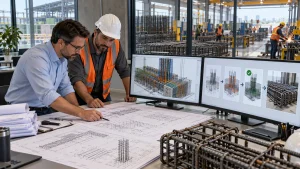
Rather than using disconnected emails and file transfers, BIM consultants assist the teams in operating in the shared platforms, and models, drawings, and documents are centrally managed. Such visibility helps in minimizing confusion, accelerating authorized decisions, and having everybody operating on the most up-to-date data.
Better collaboration saves time and eradicates redundancy and avoids expensive errors due to inaccurate or conflicting data.

Better Procurement and Prefabrication Opportunities
BIM consulting also unlocks cost savings through prefabrication and modular construction strategies. When models are developed to higher levels of detail and accuracy, components can be fabricated off-site with confidence.
Prefabrication reduces:
- On-site labor costs
- Material waste
- Installation time
- Safety risks
BIM consultants help define modeling requirements that support fabrication-ready outputs, ensuring that digital designs translate seamlessly into physical components. These efficiencies often account for a significant portion of the 20–30% cost reduction on complex projects.
Lifecycle Cost Savings Beyond Construction
The financial benefits of BIM consulting do not end at project handover. By structuring models with asset data and maintenance information, BIM consultants support long-term operational savings for owners.
Facility managers gain access to accurate digital twins that improve maintenance planning, reduce downtime, and extend asset life. These operational efficiencies represent substantial cost savings over the building’s lifecycle, further increasing the return on investment.
Why BIM Consulting Delivers Measurable ROI
The reason BIM consulting consistently delivers 20–30% cost savings is not due to a single feature or tool, but the systemic improvement of how projects are planned, coordinated, and executed. BIM consultants bring expertise, structure, and strategic oversight that most project teams cannot develop internally under tight deadlines.
By eliminating waste, reducing risk, improving accuracy, and enhancing collaboration, BIM consulting transforms BIM from a modeling exercise into a cost-control engine.
Conclusion
In today’s competitive New York AEC market, cost control is no longer optional—it is a strategic necessity. Local developers, architects, and contractors across Long Island and the greater NYC area are under constant pressure to deliver projects on time and within budget, which is why BIM consulting has become essential for reducing project costs by 20–30% while improving quality, predictability, and collaboration. Rather than reacting to costly issues in the field, BIM consulting allows teams to identify and resolve problems digitally before construction begins, helping protect margins and improve efficiency. With support from STRAND Consulting, located at 490 Wheeler Rd, Suite 108, Hauppauge, NY 11788, local firms gain data-driven insights that streamline workflows, reduce rework, and keep projects moving smoothly. As project complexity continues to grow throughout New York, BIM consulting is not an expense but a smart investment with measurable financial returns—and firms can connect directly with STRAND Consulting at (631) 805-3179 or view their location here.