The issue of rework is still among the most continuous and expensive problems of the architecture, engineering, and construction (AEC) field. The problems do not just increase expenditures but also burden schedules, destroy the confidence of stakeholders, and lower project efficiency.
BIM services have also been a revolutionary answer to the issue of architectural building information modeling. When undertaken at an appropriate time and in a collaborative manner, BIM can help minimize the design- and construction-related rework by up to 25 percent and provides quantifiable accuracy, coordination, and predictability throughout the lifecycle of the whole project.
This blog explains how this reduction is attained by architectural BIM services, why rework is still the scourge of the traditional workflow, and how BIM has turned out to be a key engine of efficiency in contemporary building delivery.
The True Cost of Rework in Architecture and Construction
Rework is not given much attention due to the fact that it does not always appear on the balance sheet in terms of cost. Whereas direct costs (labor, materials, redesign, etc.) are relatively easier to measure, indirect costs are much more difficult to measure.
These include:
- Delays and schedule compression of the project.
- Higher Requests of Information (RFIs)
- Change orders and contract disputes.
- Reduced labor productivity
- Loss of client confidence
- Increased cost of operation and lifecycle
According to industry research, rework may cost the project 515% of the total project cost, and in complex projects, the rework cost may be much more. Most of this waste is not created on-site; rather, it is created up the chain during the design and coordination process.
Why Traditional Design Processes Lead to Rework
Conventional architecture processes are based on 2D drawings and disjointed records. The different disciplines, such as architecture, structure, and MEP, are not really coordinated but tend to working parallel to each other.
This strategy has a number of systemic vulnerabilities:
- Cross-checking of drawings manually.
- Intensive reliance on human judgment.
- Low perception of spatial conflict.
- Late identification of design defects.
- Poor change management
These weaknesses are compounded as the complexity of the project grows, and it becomes almost impossible to rework.
What Are Architectural BIM Services?
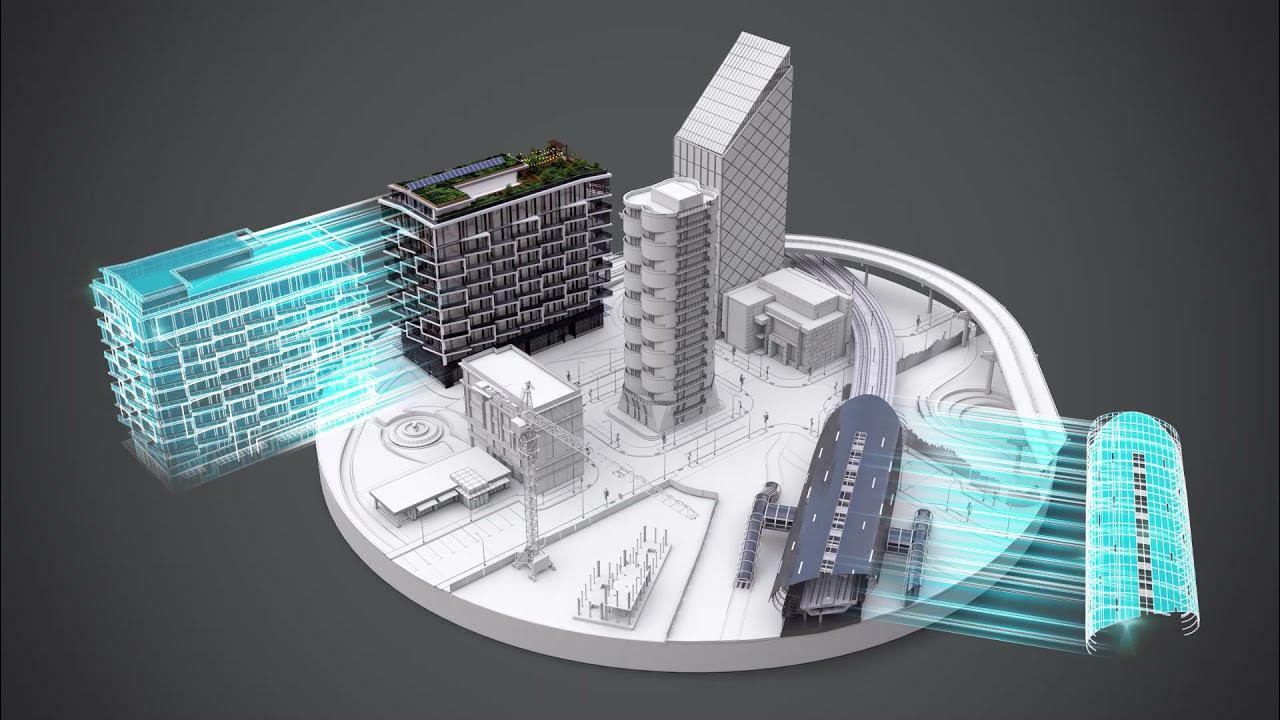
Architectural BIM services are much more than 3D modeling. They include developing a data-intensive, smart digital model of a building that pulls together geometry, performance, relationships, and construction logic into a common coordinated model.
The most important architectural BIM services include:
- Theoretical and project BIM modeling.
- Creation of designs and elaborated modeling (LOD 200 300)
- BIM LOD 400 (construction-ready).
- Synchronization and conflict resolution among the various departments.
- The validation of visualization and design.
- Record models (LOD 500), As-built and record models (LOD 500)
The BIM model turns into one source of truth, to which all stakeholders are oriented on precise and updated information.
How Architectural BIM Services Reduce Rework by 25%
The decrease in the number of rework due to BIM is not so much a concept but the outcome of the systematic prevention of errors instead of the reactive problem-solving.
The following are the fundamental processes by which BIM can provide this effect:
1. Early Clash Detection Eliminates On-Site Conflicts
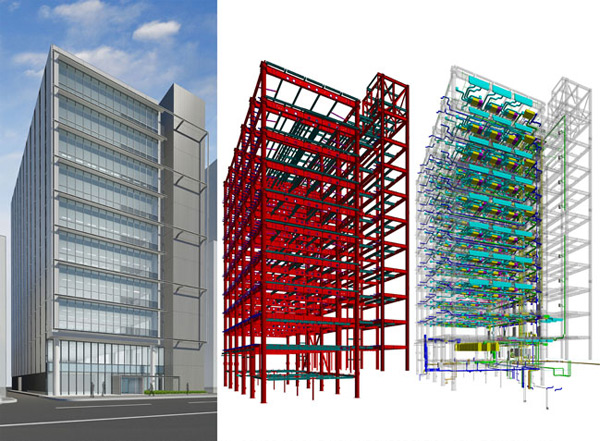
Among the biggest causes of rework, discipline clashes found on the construction site may be identified. These can include:
- Application of ductwork at beam intersections.
- Plumbing that is conflicting with walls or ceilings.
- Electrical systems that are not compatible with the architecture.
Architectural BIM services involve more sophisticated coordination, where the clashes are identified and solved at the design stage when the modifications are much less costly.
A significant number of the 25 percent reduction in rework can be solely attributed to clash detection and is more prominent on complex or MEP-intensive projects.
2. Consistent and Accurate Design Documentation
All plans, sections, elevation, schedules, and other drawings are created out of the model in a BIM-based workflow. This will guarantee consistency in all documentation.
When a change is made:
- All other associated opinions update automatically.
- The quantities are automatically adjusted.
- There is the removal of conflicting revisions.
This does away with rework brought about by:
- Outdated drawings on-site
- Contradictory dimensions
- Manual drafting errors
The outcome is better construction documents and fewer mistakes associated with interpretation.
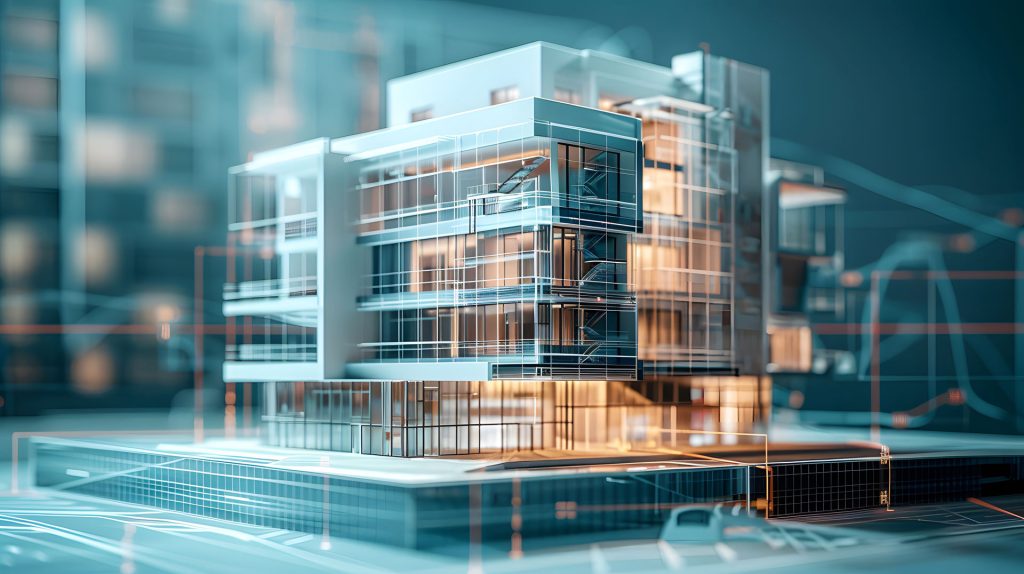
3. Improved Multidisciplinary Collaboration
Ineffective communication between disciplines is one of the major causes of rework. BIM eliminates the disjointed working processes in favor of a coordination of models.
The architectural BIM services allow:
- Shared federated models
- Organized coordination conferences.
- Transparency on design purpose.
- Centralized issue tracking
Teams do not respond to problems at the last moment, but take an initiative to spot and fix problems at their initial stages. Such a team-based atmosphere will minimise the revision process and false assumptions.
4. Constructability and Buildability Analysis
Several rework problems are not a result of design mistakes but rather, they are designs that are hard or impossible to construct.
Architectural BIM enables the teams to consider constructability in design by analyzing:
- Installation clearances
- Equipment and maintenance access.
- Sequencing constraints
- Fabrication feasibility
BIM assists in removing repetitive work occasioned by unrealistic design choices that would manifest themselves during the implementation process.
5. Accurate Quantity Takeoffs and Cost Control
Estimates of quantities are usually inaccurate and lead to late design changes when the budget is surpassed. BIM is a solution to this in that model-based quantity takeoffs are produced with a high level of accuracy.
Benefits include:
- Reliable cost estimation
- Improved procurement planning
- Reduced material waste
- Fewer cost-driven redesigns
When the cost and the design remain the same, chances of rework are reduced considerably.
6. Effective Change Management
Any project must experience change. The distinction in the management of change is in the way changes are handled.
Ahead of change implementation, teams would be able to determine its impact on structure, systems, cost, and schedule. This avoids inconsistent making of changes, which tends to cause chain reaction mistakes and rework.
Measuring the 25% Reduction in Rework
Successful projects that successfully apply the architectural BIM services reportedly indicate improvements to be measurable, including:
- 20–30% reduction in RFIs
- A quarter of coordination revisions are reduced.
- Reduction of change orders by a large margin.
- Better compliance with the schedule.
- Increased productivity of construction.
The 25 percent decrease is cumulative, which is attained by early identification as well as improvement of coordination and smarter decision-making during the project lifecycle.
Conclusion
Thus, a 25% decrease in rework, far from being fanciful or idealistic, is both possible and comes through precisely due to an effective architectural BIM. This is owed to BIM itself, where it is easier to identify problems, enable coordination, enhance visualizations, and effectively manage changes of any type.
In an industry where margins are tight and complexity appears to expand daily, architectural BIM services are not just nice to have; rather, architectural BIM services are a vital building block on which efficiency, quality, and successful outcomes are achieved. Those that are successfully adopting it today are not only minimizing rework, they are also designing smarter, faster, and more confidently.