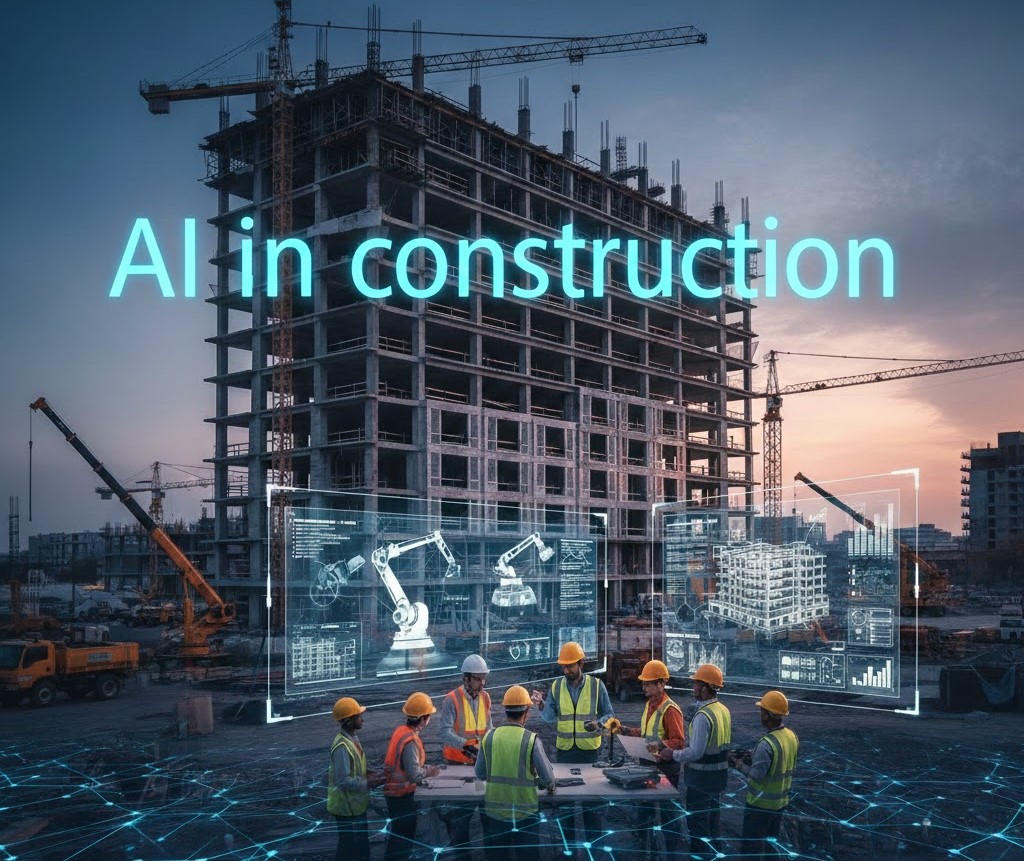
For years, AI has been promoted as the next big thing in construction. Many companies heard promises about instant automation, “smart” job sites, and robots that would replace human crews. While some of those ideas were exaggerated, the truth is that AI is finally becoming useful in real, practical ways. One of the areas where this change is most visible is Building Information Modeling (BIM).
Contractors, architects, and engineers are learning that AI is not a replacement for BIM. Instead, it strengthens BIM by improving accuracy, productivity, and collaboration across project teams. In this blog, we explore how AI is being used today, why it matters, and what the future may look like.
The Real Meaning of AI in Construction
Construction teams handle large amounts of data every day. Drawings, models, schedules, estimates, drone scans, safety reports, and site notes are all part of the workflow. The problem is that this information is scattered, updated at different times, and often cross-checked manually. That creates mistakes, delays, and communication gaps.
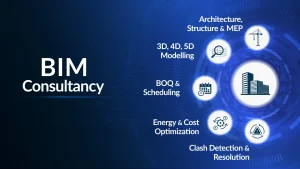
AI helps by recognizing patterns, connecting information, and predicting issues before they turn into problems. It speeds up decision-making and reduces manual workload. When linked with BIM Consulting, the results become even stronger because BIM already centralizes data. AI simply makes it smarter.
How AI Is Transforming BIM Workflows
BIM has always improved coordination and planning, but AI takes those strengths further. By analyzing project data in real time, AI helps teams detect issues early, automate repetitive tasks, and keep designs more consistent. The result is a faster, more efficient workflow from design to construction.
1. Clash Detection That Saves Time and Money
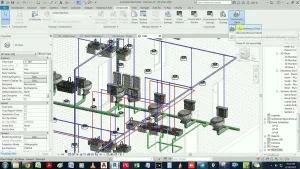
Clash detection has always been one of the biggest advantages of BIM, but it can also feel overwhelming. Large projects may generate thousands of clashes, and manually reviewing them takes days. AI changes the process. It can scan the entire model and highlight the clashes that actually matter. Minor issues get filtered out, and high-impact clashes are grouped together so teams can resolve them in a logical order. This cuts hours of manual review and leads to fewer redesign cycles. Learning these processes is part of the essential BIM Manager skillset for modern projects. And because AI can learn from previous projects, it gets better at recognizing patterns that commonly cause delays. Leveraging BIM Modeling Services and specialized Revit BIM modelling further enhances clash detection, ensuring issues are caught early and project delivery stays on track.2. Smarter Design Assistance Instead of Full Automation
AI has introduced new possibilities for design teams. Instead of drawing every layout manually, designers can now generate different options with the help of AI-powered tools. These tools consider spacing, codes, performance requirements, and material usage before recommending layout variations.
For example, AI can create several HVAC routing options based on efficiency and available space. The engineer then reviews, adjusts, and finalizes the design. This approach saves time and keeps the designer in full control. The goal is not to replace experience or judgment. It is to remove repetitive work so professionals can focus on quality.
3. Coordination That Feels More Natural
BIM coordination can be challenging when multiple teams are updating the model at the same time. Miscommunication happens when someone misses an update or works on an outdated version.
AI helps maintain smooth coordination by tracking changes, comparing versions, and alerting teams when something affects their part of the model. Instead of waiting for weekly meetings to discover problems, AI gives real-time visibility. This reduces delays and keeps everyone aligned.
On complex projects, this also strengthens collaboration between architects, engineers, and contractors. Each team can trust that they are working with the most up-to-date data.
4. Better Estimating and Takeoff Accuracy
Estimators know how time-consuming takeoffs can be. Reading drawings, counting elements, and checking quantities manually leaves room for errors. AI-supported takeoff tools analyze BIM models automatically and produce clear quantity lists.
This improves both accuracy and speed. Estimators can shift their focus from counting materials to refining pricing and studying project risks. When bids are built on reliable quantities, contractors get a clearer picture of real cost expectations.
AI-based takeoffs improve:
- Faster quantity extraction
- Fewer manual errors
- Stronger and more competitive bid proposals
- More predictable project costs
This mix of automation and human judgment leads to better estimation and business decisions.
5. Predictive Safety Planning
Safety is a priority on every project, and AI brings a new layer of support to safety teams. When combined with BIM, AI can highlight:
- Sections with high installation risks
- Sequences that may cause unsafe site conditions
- Areas where heavy equipment might collide with structures
Instead of reacting to incidents, teams can prevent them. This makes job sites safer and reduces the costs associated with delays, injuries, or compliance issues.
6. Progress Tracking With Real-World Accuracy
Construction generates huge amounts of visual data through drone scans, mobile photos, and 360-degree site captures. AI can compare these images with the BIM model and identify mismatches within minutes.
This helps project managers see:
- What has been completed
- What is behind schedule
- Where the installation does not match the model
The days of relying purely on manual site inspections are fading. AI gives teams a faster and more reliable way to validate progress.
7. Stronger Facility Management After Completion
Most BIM benefits don’t stop at handover. Facility managers use models to track equipment, plan maintenance, and manage building operations. AI strengthens this stage by predicting equipment failures, suggesting maintenance schedules, and analyzing energy consumption. Leveraging insights from BIM prefabrication ROI can further optimize operations and reduce long-term costs. For example, AI can study the historical performance of HVAC units and predict when they may break down. This helps building owners avoid expensive repairs and keep systems running efficiently. Integrating lessons from spatial coordination challenges for MEP systems ensures smoother maintenance planning. Additionally, understanding Autodesk fabrication ductwork processes can help teams anticipate issues and maintain system efficiency. Over time, this also improves the overall value and performance of the building.Why AI Adoption Matters for Construction Companies
Construction is already competitive. Margins are tight, schedules are demanding, and clients expect high-quality results. Companies that integrate AI into their BIM workflows often notice clear advantages.
One of the biggest benefits is a reduction in rework. AI catches issues early, and early fixes cost far less than on-site corrections. Project schedules also become more manageable because delays are identified before they cause disruption.
AI also improves overall quality. Designs become more accurate, coordination becomes stronger, and decision-making becomes faster. This leads to better outcomes for clients and smoother operations for contractors.
Real Examples of AI in BIM-Based Workflows
AI is no longer a distant idea in construction. It’s already improving everyday BIM workflows in ways that teams can see and measure. Here are some real examples of how AI is being used on active projects.

Generative MEP Layouts
AI can quickly propose multiple MEP routing options. Engineers no longer spend hours sketching basic layouts. Instead, they evaluate AI suggestions, refine them, and select the most effective solution.
Automated Model Checking
Instead of manually reviewing files for naming issues or code compliance, AI checks the model for errors in the background. This avoids unnecessary redesigns and keeps documentation consistent.
Image-Based Validation on Job Sites
AI can scan site images and compare them to the digital model to detect missing installations, misalignment, or improper sequencing. This gives teams reliable feedback without needing long review sessions.
Structural Risk Predictions
AI evaluates structural models to find areas with potential issues. It does not replace structural engineers, but it provides an extra set of eyes that helps teams make safer decisions.
Challenges That Companies Still Face
Even though AI brings noticeable benefits, adoption is not always simple. Construction companies often face a few common obstacles.
- Poor data quality is one of the biggest issues. If BIM models contain missing or incorrect information, AI cannot produce useful predictions. Good AI output depends on strong input.
- Another challenge is training. Teams need time to learn how AI tools work and how to integrate them into existing workflows. Without proper training, tools remain underused.
- Some professionals also resist change, especially when new systems feel complicated. Clear communication, step-by-step adoption, and visible results can help reduce this resistance.
How Construction Teams Can Start Using AI With BIM
Getting started does not require large investments or major workflow changes. Teams can begin by setting small goals, such as improving clash detection or speeding up takeoffs. Each improvement builds confidence and prepares the team for broader adoption.
Another effective step is offering hands-on training. When people see how AI simplifies their daily work, hesitation fades.
Choosing flexible tools also matters. Software should integrate smoothly with existing BIM platforms and allow teams to scale usage over time.
Finally, it helps to treat AI as a supportive tool, not a replacement. Strong workflows come from combining solid human expertise with analytical support from AI
What the Future Might Look Like
AI is still growing, and its role in BIM will continue to expand. Future developments may include project schedules that update themselves based on model changes or materials tracked from the supplier to the site through automated systems. Robotics may also become more common, using BIM data to guide installations with precision.
Digital twins are another promising area. With AI connected to real-time sensors, buildings will have living models that update over their entire lifespan. This will help owners reduce operating costs, improve energy efficiency, and plan long-term maintenance more effectively.
Conclusion
TAI is no longer just a trending term in construction. Here in Hauppauge, NY, it has matured into a practical, supportive tool that elevates BIM to a more predictive and productive system. By reducing errors, speeding up coordination, and improving decision-making, AI helps local construction teams deliver higher-quality work in less time.
The technology is still evolving, but its impact is already clear. Companies that begin adopting AI today position themselves for a more efficient and competitive future. BIM has always been about collaboration and accuracy. With AI, that vision becomes stronger than ever. For businesses seeking expert guidance in implementing AI-driven BIM solutions, STRAND Consulting in Hauppauge, NY, provides hands-on support and strategic advice.
You can reach them at (631) 805-3179 or visit their office at 490 Wheeler Rd, Suite 108, Hauppauge, NY 11788. Here’s the location on the map: View on Google Maps.