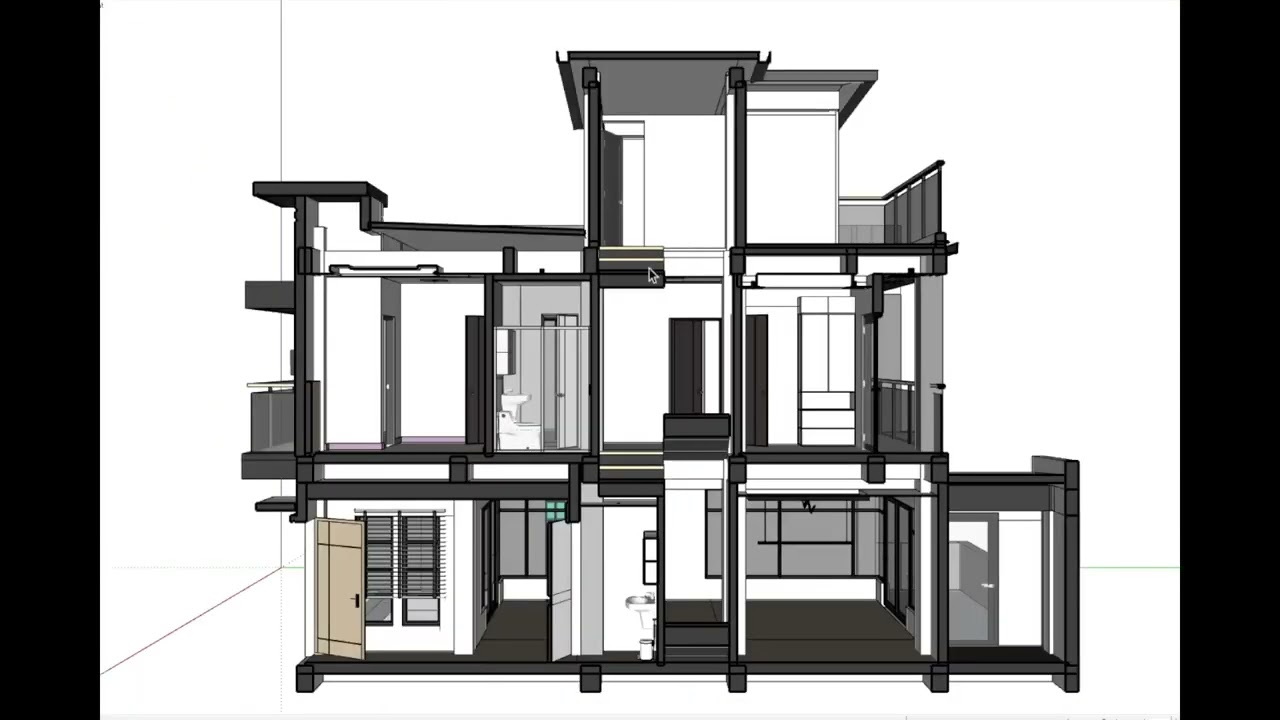
Modern construction projects are becoming increasingly complex, with architectural designs intersecting structural systems, MEP services, façade elements, and interior components. As this complexity grows, the risk of design clashes also increases, especially when coordination relies on traditional 2D drawings and fragmented workflows. The design conflicts that are identified in the construction phase cause expensive rework, schedule overruns, conflicts, and loss of design intent.
Architectural BIM coordination has come out as a potent way out of these problems. BIM enables architects and project teams to detect, analyze and resolve conflicts early in the project lifecycle by facilitating the creation of design environments that are clash free. Clash free architectural building BIM also increases the accuracy of the design and also increases the collaboration, constructability and the efficiency of the project.
In this blog, the author discusses the main advantages of clash free architectural BIM coordination and the reason behind the fact that this method has become a critical element of a successful project delivery in the modern construction sector.
What Is Architectural BIM Coordination?
Architectural integration Architectural models are combined with structural, MEP and other discipline models in a common digital environment through the process of architectural BIM coordination. This is aimed at making sure that every element of the building will be in place spatially, functionally, and constructively before the buildings are built.
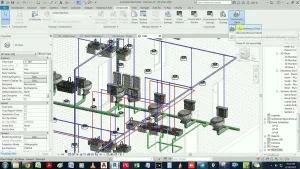
In contrast to isolated modeling, coordinated BIM workflows enable the architects to seen the interaction of the walls, floors, ceilings, openings, and finishes with the surrounding systems. Clash detection and coordination reviews allow identifying the conflicts at an early stage and resolving them in a collaborative manner. The given proactive strategy transfers the problem-solving to the design stage, where modifications are less expensive and less disruptive, and their speed is higher.
Understanding Clash-Free Design in BIM
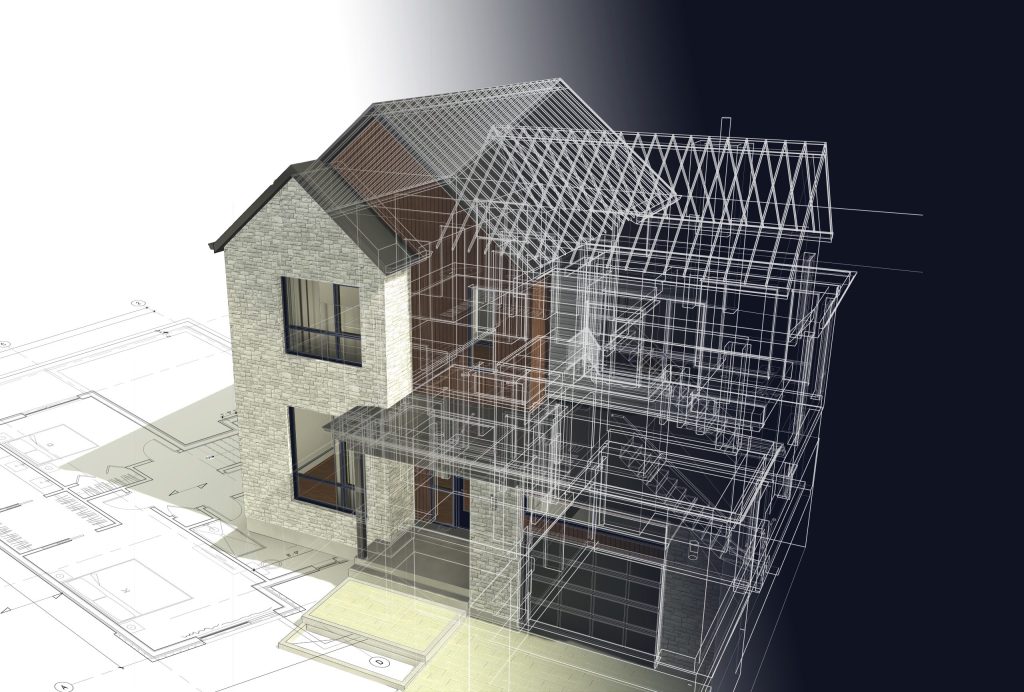
Clash-free design is that which is a coordinated BIM model in which architectural objects do not conflict with other building systems. Such conflicts may involve physical overlaps, clearance problems or constructability problems which would otherwise lead to problems on-site.
Clashes typically fall into three categories:
- Hard clashes: Physical intersections between architectural elements and other systems
- Soft clashes: Insufficient clearance for installation, access, or maintenance
- Workflow clashes: Sequencing or constructability conflicts between trades
Clash-free architectural BIM coordination ensures these issues are identified, analyzed, and resolved digitally, resulting in a coordinated and buildable design.
Early Clash Detection Reduces Costly Rework
Clash-free architectural BIM coordination is one of the greatest benefits that have helped to reduce rework. In cases where architectural conflicts are found in the construction process, they may have to be solved by demolition, redesign, material replacement and this process and practice consumes more money and time.
The BIM environment allows architects to make changes to layouts, tweak dimensions, or coordinate openings prior to drawings being released to the construction environment because of the ability to detect clashes at an early stage of the environment. Such an early intervention reduces change orders, wastes, and safeguards project budget. The price of solving a clash at the design stage will be just a fraction of the price of finding the problem at the site.
Improved Design Accuracy and Quality
The architectural BIM coordination is of great help to the design in that all the elements are modeled to be in accordance with the real world as well as the objects they represent are made to be in proportion. Architectural elements such as walls, floors, ceilings and space are prepared in tight dimensions and spaces.
Clash-free coordination decreases ambiguities in drawings and removes conflicting information within plans, sections, and details. This leads to better documentation being made available to the construction teams. With increased accuracy, there will be better construction results, less field enquiries, and better assurance to the design of the architecture.
Better Integration with Structural and MEP Systems
Architectural elements are deeply interconnected with structural and MEP systems. Poor coordination between these disciplines is one of the leading causes of clashes and construction delays.
Clash-free BIM coordination ensures that architectural layouts account for:
- Structural columns, beams, and slab depths
- HVAC duct routes and equipment clearances
- Plumbing stacks and drainage slopes
- Electrical conduits, panels, and lighting systems
By integrating architectural models with other disciplines early, conflicts are resolved logically without compromising functionality or aesthetics. This results in a well-integrated building design that performs as intended.
Streamlined Construction Schedules
One of the biggest contributors of delays in construction is design clashes. In case problems occur on the ground unpredictably, work can be halted and solutions to them are developed, approved and implemented.
Clash-free BIM coordination ensures that such interruptions are reduced as issues are resolved prior to starting the construction. Through synchronized illustrations and models, the contractors will be able to plan work with precision, chain trades to be efficient and anticipate unforeseen clashes. This will result in better workflows, reduced stoppages and quick project delivery.
Improved Constructability and Buildability
A design that appears good on paper is not necessarily one that is easily constructed. Architectural BIM coordination promotes constructability in that it enables teams to look at the way designs are to be implemented in actual settings.
Architects are able to evaluate installation access, tolerances, sequencing and interface conditions with the help of BIM. Possible construction difficulties, e.g. small spaces, complicated shapes, or incompatible assemblies, are observed at the design stage. This enables the design to be refined to ensure construction is safer, expedient and efficient.
Accurate Quantity Takeoffs and Cost Estimation
BIM models provide reliable data for quantity takeoffs and cost estimation. When architectural models are clash-free and coordinated, material quantities are more accurate and reflect actual construction conditions.
Accurate quantities help owners and contractors plan budgets more effectively and avoid unexpected cost overruns. Clash-free models also support value engineering exercises, allowing teams to evaluate design alternatives without introducing coordination risks.
Improved Visualization, Sustainability, and Long-Term Project Value Through BIM Coordination
Architectural BIM coordination plays a vital role in improving how design intent is communicated, sustainability goals are achieved, and project risks are managed. By creating clash-free, coordinated models, BIM enables project teams to visualize complex building systems clearly, integrate energy-efficient strategies effectively, and deliver long-term value beyond construction. This coordinated approach reduces uncertainty, supports informed decision-making, and ensures architectural designs perform as intended throughout the building lifecycle.
Enhanced Visualization and Design Communication
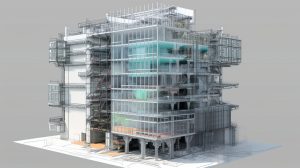
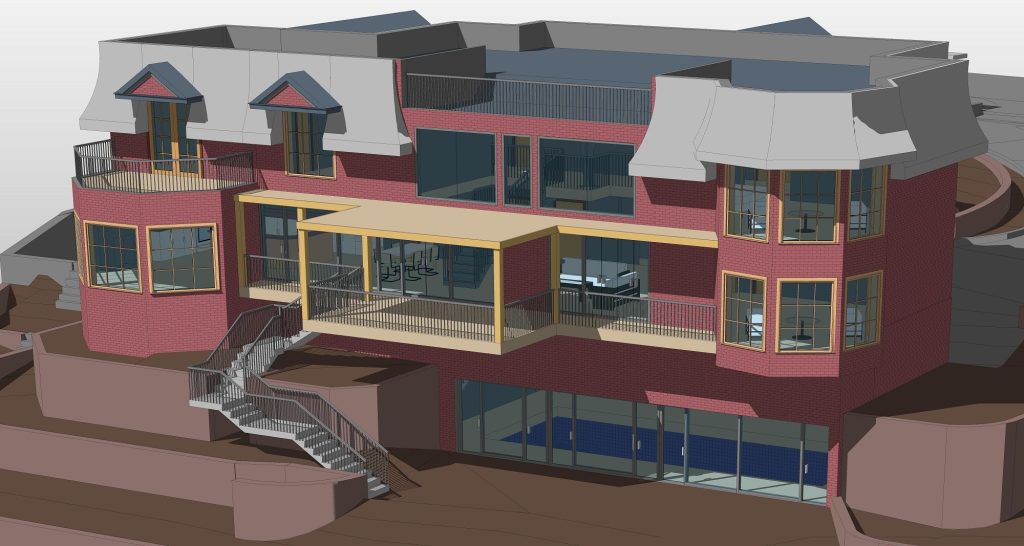
Three-dimensional BIM models allow clients, contractors, and authorities to clearly understand spatial relationships and architectural concepts. Clash-free models support walkthroughs, presentations, and design reviews, reducing misinterpretation and aligning expectations across all stakeholders.
Support for Sustainable and Energy-Efficient Design
Sustainable architectural design depends on precise coordination between building elements and systems such as daylighting, ventilation, façade performance, and insulation. BIM coordination ensures sustainability features are integrated without design conflicts and supports energy analysis and performance optimization.
Risk Reduction and Dispute Prevention
Design conflicts and unclear documentation are common causes of construction disputes. Clash-free BIM coordination minimizes uncertainty by delivering accurate, coordinated models that clearly define responsibilities and reduce the likelihood of claims and litigation.
Long-Term Value for Facility Management
Coordinated BIM models provide reliable as-built data that supports facility management, renovations, and future expansions. Accurate digital records help owners plan maintenance efficiently and avoid clashes during future building upgrades.
Reduced RFIs and Change Orders
Requests for Information (RFIs) often arise when construction documents are unclear or conflicting. A high volume of RFIs indicates coordination issues and leads to project delays.
Clash-free architectural BIM coordination produces clearer, more consistent documentation, reducing the need for RFIs. When design conflicts are resolved upfront, contractors have fewer questions, and change orders are minimized. This improves workflow efficiency and strengthens relationships between project stakeholders.
Conclusion
It is no longer a luxury to have clash-free architectural BIM coordination in today’s fast-paced New York construction market—it is a necessity. For projects across Hauppauge and the greater New York area, early clash detection and resolution through BIM helps improve design accuracy, reduce costly rework, strengthen collaboration among teams, and streamline construction delivery from start to finish.
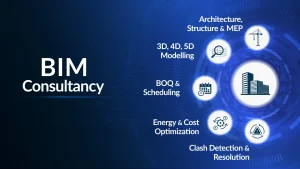
Working with a trusted BIM Consultancy Company ensures projects stay on budget and on schedule while meeting the high quality standards expected in the region. From commercial developments to complex architectural builds, strong BIM coordination adds long-term value by improving reliability, constructability, and asset performance.
As construction projects continue to grow in scale and complexity across New York, implementing robust BIM coordination workflows is essential for delivering efficient, high-quality buildings with confidence. For expert BIM support, contact Strand Consulting at (631) 805-3179, email connect@strand-co.com, or visit us at 490 Wheeler Rd, Suite 108, Hauppauge, NY 11788, USA.