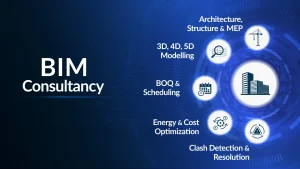

In 2026, the architecture, engineering, and construction (AEC) industry stands at a crossroads. Digital transformation is not a dream anymore, it is a real operational requirement. To remain competitive and strong, companies are required to consider Building Information Modeling (BIM) as an instrument and also as one of their core competencies. Nevertheless, to be able to embrace BIM properly means that one has to do more than use money to buy software licenses. It needs BIM consulting, strategic advice, best-practice processes, and optimization of processes and cultures.
In this detailed blog, we explore how BIM consulting can be beneficial to AEC firms in 2026. Better coordination, reduced risks, cost savings, retaining talent, and future preparedness are only some of the benefits of BIM consulting that is not so much of a nice-to-have but a game-changer.
What Is BIM Consulting?
BIM consulting is defined as professional consultative and implementation services which assist architecture, engineering, and construction (AEC) companies to successfully convert, operate, and optimize Building Information Modeling in their projects as well as organizations.
Instead of merely looking at the use of software, BIM consulting considers the entire process of digital workflow, beginning with the determination of BIM strategies and execution plans and running through to setting standards, data profiles, and collaboration procedures. This is intended to make sure that BIM is utilized on a consistent, precise, and per-project-need and business-purpose basis.

Why BIM Consulting Matters More Than Ever in 2026
In this context, BIM consulting is not only beneficial but also essential. The construction landscape in 2026 is defined by:
- Increasing demands for sustainability, performance analytics, and lifecycle value
- Growing complexity of infrastructure, modular buildings, and smart cities
- Rising client expectations for transparency, speed, and data-driven decision-making
- Regulatory pressures and global standards (e.g., ISO 19650)
- The need for digital twins and ongoing facility management integration
1. Strengthened Digital Transformation and Strategic Alignment
Among the main advantages of BIM consulting is the fact that it transforms BIM into a strategic capability and not a tactical activity. The reason why many AEC firms can embrace BIM is that they have to, yet the lack of a roadmap makes it difficult to get the maximum out of it.
A BIM consultant helps firms:
- Define clear digital transformation goals
- Align BIM objectives with business strategy
- Identify the right tools and platforms for long-term success
- Establish KPIs and performance benchmarks
This level of strategic fit means that BIM implementation is meaningful, in that it helps to serve greater business objectives such as profitability, quality, and market differentiation.
2. Enhanced Collaboration and Cross-Discipline Integration
In the traditional workflows, architects, and contractors tend to perform in silos. Serious issues such as miscommunication, versioning, and model clashes are frequent and cause expensive rework and wastage.
BIM consulting changes that by:
- Establishing model coordination standards
- Facilitating multi-discipline integration (architectural, structural, MEP, etc.)
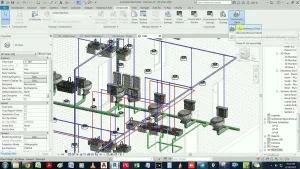
- Implementing clash detection and resolution workflows
- Supporting federated model reviews and approval protocols
The outcome is one source of truth in which all stakeholders operate with coordinated and consistent data, which minimizes friction and speeds up project delivery.
3. Reduced Rework and Cost Savings
One of the hidden costs of construction, which is also the most costly, is rework. Research on industry has consistently established that rework may contribute up to 5-15% of the overall project costs.
BIM consulting mitigates this by:
- Ensuring accurate, coordinated models early in design
- Detecting clashes, inconsistencies, and conflicts before construction
- Supporting buildability reviews and simulations
- Enforcing BIM execution plans that reduce errors downstream
By catching issues in the digital space rather than on the jobsite, firms save millions in corrective labor, material waste, and schedule overruns.
4. Accelerated Project Delivery
In construction, time is money. Delays spread in labor, equipment leasing, finance charges, and penalties payable on the contract.
BIM consultants help AEC firms:
- Implement 4D BIM scheduling (linking models to timeline)
- Improve sequencing and logistics planning
- Support prefabrication and modular construction (driven by BIM data)
- Enable parallel design and construction planning
Such capabilities shorten project schedules and enhance predictability, that is, provide a smooth sail to projects that can deliver their projects on time or even earlier.
5. Higher Quality and Model Accuracy
A BIM model is not just any geometry and data; it is a dependable model of the physical and functional features of the building.
BIM consultants establish:
- Model quality standards
- Level of Development (LOD) or Level of Information Need (LOIN) frameworks
- Automated quality checks and validation processes
- Documentation protocols for version control
This disciplined approach ensures that models are reliable, auditable, and useful for design decisions, clash resolution, and downstream tasks like cost estimation.

6. Better Risk Management and Compliance
The construction industry is increasingly regulated and accountable. BIM consulting strengthens risk management by:
- Implementing compliance checks with standards like ISO 19650
- Providing documentation for audit trails
- Reducing adversarial claims and disputes through coordinated data
- Supporting health and safety planning via model analysis
In the cases where companies embrace BIM without the support of the consultants, they expose themselves to the gaps in compliance and project risk. A consultant makes sure that there is strong risk governance in the lifecycle.
7. Cost Estimation and 5D BIM Integration
With BIM consulting, firms unlock the power of 5D BIM, the integration of cost data with the digital model.
Consultants help teams:
- Extract quantities automatically from the model
- Link cost libraries and construction budgets
- Generate accurate cost forecasts and scenario analysis
- Support change management with real-time cost impact reports
This enables precise budgeting, cost control, and value engineering throughout design and construction.
8. Support for Sustainable and Performance-Driven Design
Sustainability is no longer an optional value add, it’s mandated by owners and regulators alike.
BIM consulting supports:
- Energy modeling and performance optimization
- Carbon footprint analysis
- Material life-cycle assessment
- Optimization of resource usage
Consultants help firms embed sustainability analysis into BIM workflows, ensuring projects meet environmental goals and are optimized for long-term performance.
9. Digital Twin Readiness and Lifecycle Asset Management
In 2026, the value of BIM extends well beyond construction into operations and maintenance. Owners increasingly require digital twin deliverables, dynamic digital replicas of physical assets that support real-time monitoring, maintenance, and performance tracking.
BIM consulting prepares firms to:
- Deliver data-rich models that feed digital twin platforms
- Structure asset data for long-term use
- Support facilities management with consistent, queryable information
This lifecycle approach extends the value of BIM far beyond project delivery, helping owners minimize operational costs and maximize asset performance.

10. Training, Skill Development, and Organizational Change
Technology adoption without skill development leads to underutilized systems. BIM consulting includes organizational change management, ensuring your team can sustain and grow digital capabilities.
Consultants often provide:
- Role-based training and workshops
- Certification pathways
- Mentorship and knowledge transfer
- Onboarding and standardization protocols
Upskilled teams are more confident, productive, and capable of leveraging BIM tools for strategic outcomes.
11. Improved Client and Stakeholder Communication
Effective communication is critical, especially on complex or high-profile projects. BIM consulting enhances communication by:
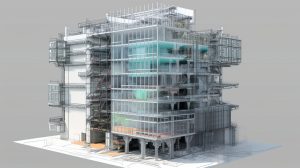
- Producing visually rich 3D models and dashboards
- Enabling real-time model review sessions
- Sharing coordinated data with owners, contractors, and regulators
- Supporting better decision-making through data transparency
Stakeholders are better informed, more aligned, and more satisfied with project progress.
12. Scalability and Repeatable Best Practices
BIM consultants help firms transition from ad hoc BIM use to enterprise-level standards. This includes:
- Developing a reusable BIM execution framework
- Creating templates and libraries for future projects
- Establishing quality assurance checklists and review cycles
- Scaling BIM maturity across offices and teams
Scalability ensures that BIM benefits are not limited to one project but realized across the organization.
Conclusion
In 2026, BIM is no longer just a tool—it is a core business capability for AEC firms across New York. BIM consulting helps local architects, engineers, contractors, and owner-operators unlock the full value of digital workflows. As a result, teams collaborate better, project risks are reduced, delivery timelines improve, and profit margins grow. From early BIM adoption to advanced digital twin implementation, expert guidance ensures that every technology investment turns into measurable business results.
For firms operating in Long Island and the greater New York area, working with STRAND Consulting provides a clear advantage. Whether you are a design firm, a contractor, or a facility owner, BIM consulting is one of the smartest ways to future-proof your organization, stay competitive in the local market, and deliver exceptional outcomes for your clients. With a physical presence at 490 Wheeler Rd, Suite 108, Hauppauge, NY 11788, and direct support available at (631) 805-3179, STRAND Consulting offers hands-on expertise tailored to regional project needs.