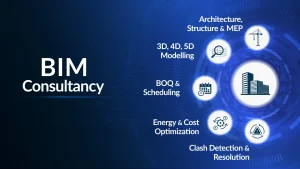
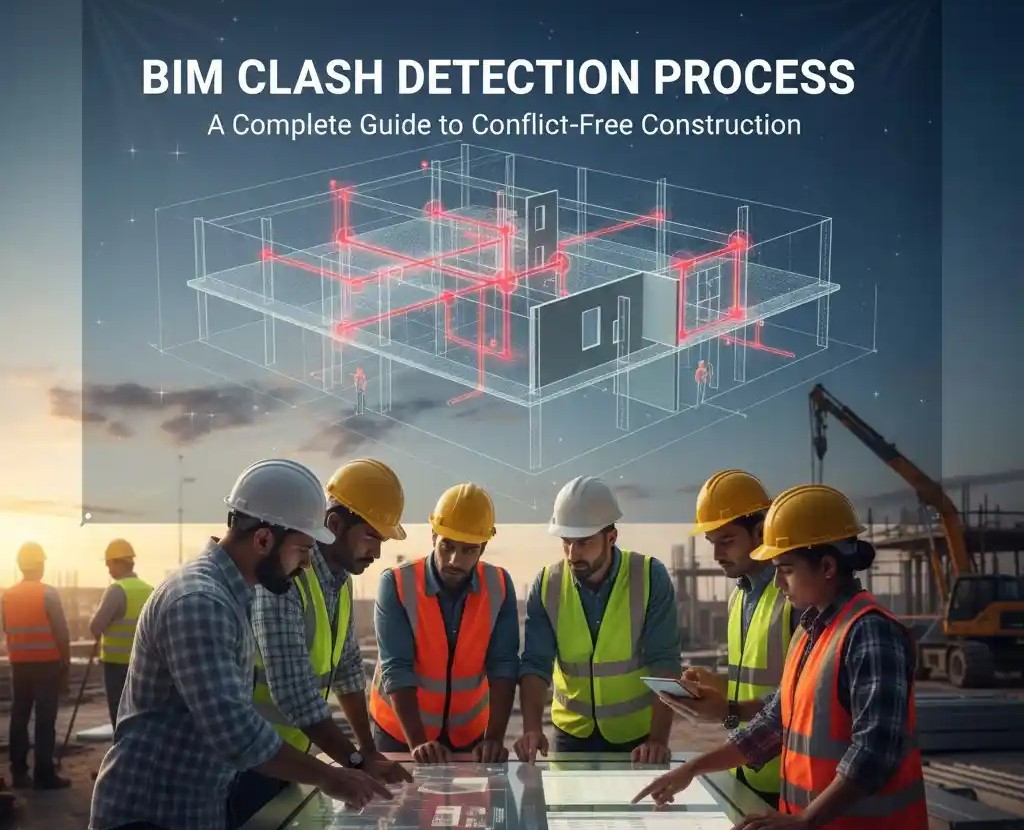
With the ever-changing nature of modern construction, Building Information Modeling (BIM) has changed the way architects, engineers, and contractors work together. The BIM clash detection process is one of the most vital elements of the BIM that guarantees the successful delivery of the project. This is a systematic process of identifying, classifying, and solving design conflicts way before it gets on site and helps to save time, money, and frustration.
This guide will provide a detailed examination of what the BIM clash detection process entails, how it is carried out, the tools being used, and the reason why it has become an inseparable aspect of construction management.
What Is Clash Detection in BIM?
Before diving into the process, it’s essential to understand what clash detection means.
Digital clash detection in BIM is the process of identifying conflicts or clashes in a digital building model (digital 3D) that are created when two or more elements in a building model occupy the same space or conflict with each other. These conflicts are either geometric, logical, or workflow-based.
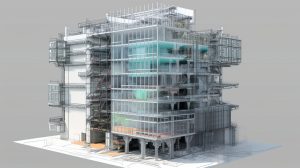
During the preconstruction phase, 3D BIM modeling will allow visualizing, identifying, and addressing these issues, which will result in a more successful implementation of the project.
Why the BIM Clash Detection Process Matters
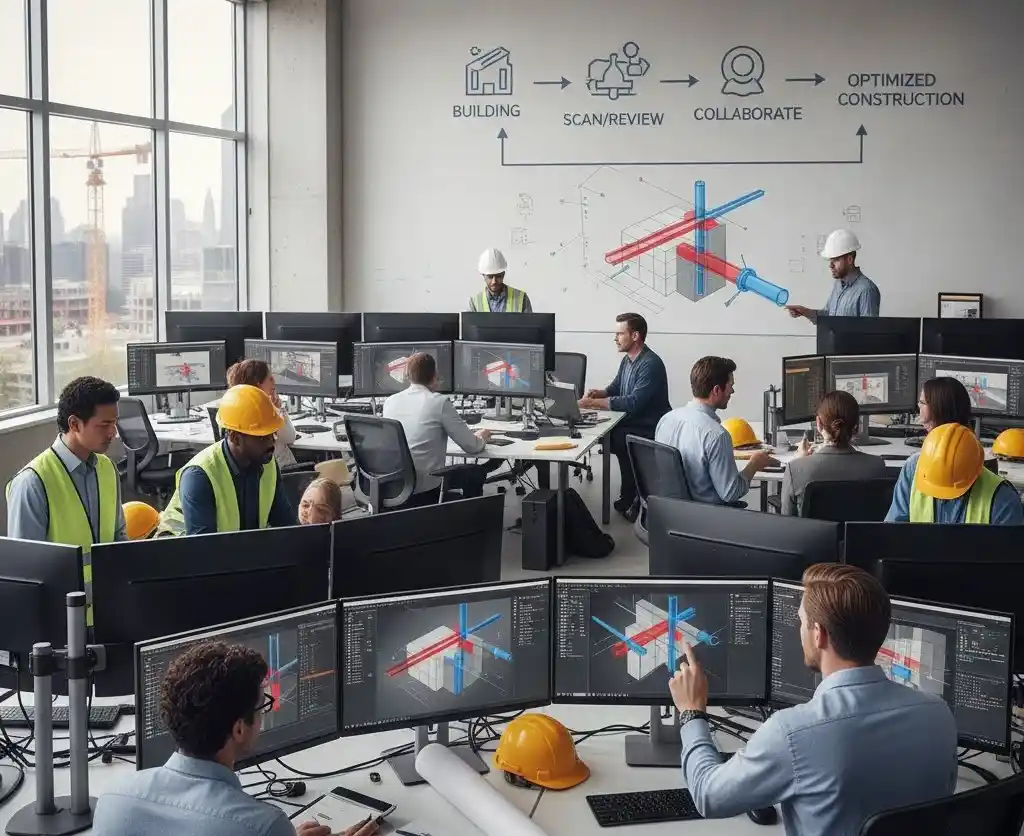
Clash detection isn’t just a technical task—it’s a strategic process that directly impacts project cost, quality, and schedule. Here’s why it’s so important:
- Prevents Costly Rework:
Fixing issues in the design phase is exponentially cheaper than addressing them during construction. Early detection reduces material waste, labor costs, and change orders. - Enhances Coordination:
It promotes collaboration among MEP (Mechanical, Electrical, Plumbing), structural, and architectural teams by highlighting where their systems intersect. - Improves Construction Efficiency:
When clashes are resolved before the construction phase, it minimizes site disruptions and accelerates project delivery. - Supports Prefabrication:
With clear coordination, prefabricated components can be accurately produced off-site, improving speed and quality control.
Types of Clashes Detected in BIM
The BIM clash detection process identifies three main types of clashes:
1. Hard Clashes
These occur when two physical components occupy the same space — for example, a wall intersecting a column or a pipe passing through a duct. Hard clashes are geometric and easy to identify using BIM software.
2. Soft Clashes (Clearance Issues)
Soft clashes occur when elements don’t have adequate space for operation, safety, or maintenance. For instance, insufficient clearance around an HVAC unit that prevents future servicing.
3. Workflow or 4D Clashes
These involve scheduling and sequencing conflicts, often identified in 4D BIM models. For example, if electrical installation is scheduled before the framing is completed, it creates a workflow clash.
Each clash type requires a specific strategy for resolution, making the BIM clash detection process a structured and collaborative effort.
The BIM Clash Detection Process: Step-by-Step
Now that we understand what clash detection is, let’s explore how the BIM clash detection process unfolds from start to finish.
Step 1: Model Integration and Coordination
The process begins by gathering and integrating discipline-specific BIM models — typically architectural, structural, and MEP models — into a single, coordinated model.
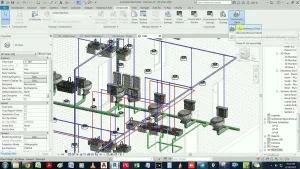
Tools like Autodesk Navisworks, Solibri, or Revizto are commonly used for model federation. The goal is to bring all design elements into one shared environment for holistic review.
At this stage:
- The models are checked for consistency and correct coordinate systems.
- All updates and revisions are synchronized.
- Naming conventions and model hierarchies are standardized.
Outcome: A fully integrated 3D BIM model ready for clash detection analysis.
Step 2: Defining Clash Detection Rules
Once the integrated model is ready, the next step is to set up rules and parameters for clash detection.
For example:
- Specify which systems should be checked against each other (e.g., HVAC vs. structure).
- Define tolerance levels for spacing.
- Assign clash detection priorities based on project stage or criticality.
By setting clear rules, the process avoids unnecessary false positives and ensures relevant clashes are identified.
Outcome: A rule-based framework that guides the clash detection process efficiently.
Step 3: Running Clash Tests
The next phase involves executing automated clash detection tests using BIM software. The software scans the model for geometric intersections and inconsistencies between the selected elements.
Depending on the project size and complexity, tests can range from small subsystem checks (e.g., electrical conduits vs. ceiling grids) to full-model scans.
Outcome: A detailed list of detected clashes with precise coordinates, affected components, and visual representations.
Step 4: Reviewing and Categorizing Clashes
After the clash test, hundreds — sometimes thousands — of clashes may be detected. The project team then reviews and categorizes them according to severity and type.
Typical categories include:
- Critical clashes: Require immediate attention.
- Major clashes: Affect system performance or constructability.
- Minor clashes: Aesthetic or non-critical overlaps.
- False positives: Tolerable overlaps within defined limits.
This step is crucial for focusing on high-priority issues that can impact cost or safety.
Outcome: A well-organized clash report that streamlines communication and prioritization.
Step 5: Clash Coordination Meetings
The next stage involves clash resolution meetings—a collaborative step where stakeholders, including architects, engineers, and contractors, discuss and resolve conflicts.
During these sessions:
- Each clash is reviewed in detail using visual BIM tools.
- Responsibilities are assigned to the relevant discipline.
- Solutions are proposed and documented in a shared coordination platform.
This iterative approach ensures everyone is aligned before finalizing design revisions.
Outcome: Approved design changes and a coordinated plan for model updates.
Step 6: Clash Resolution and Model Update
Once solutions are agreed upon, the respective discipline teams update their BIM models to resolve the clashes. These revised models are then re-integrated into the main federated model.
A new round of clash detection tests may be conducted to confirm that all issues have been addressed and no new clashes have been introduced.
Outcome: A conflict-free, fully coordinated BIM model ready for construction documentation or 4D simulation.
Step 7: Documentation and Reporting
Finally, the entire BIM clash detection process is documented with detailed reports. These reports include:
- Clash statistics (number, type, and resolution status).
- Assigned responsibilities.
- Visual snapshots of before-and-after resolutions.
- Coordination meeting logs.
Comprehensive documentation ensures accountability and serves as a valuable reference for future project stages.
Outcome: A complete clash detection report validating model accuracy and project readiness.
Tools Used in BIM Clash Detection Process
Modern BIM clash detection relies on sophisticated software that automates and visualizes the process. Popular tools include:
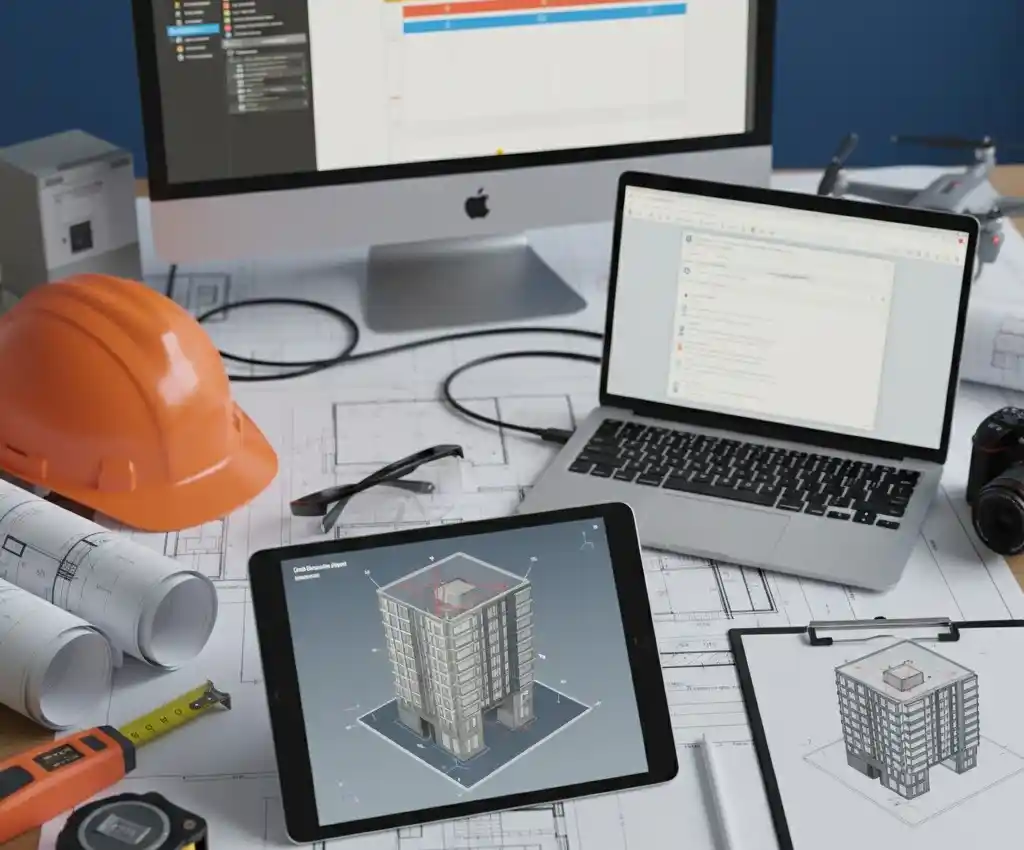
- Autodesk Navisworks Manage – The industry standard for federating models, running clash tests, and managing coordination.
- Solibri Model Checker – Known for rule-based model validation and advanced quality control.
- BIMcollab – A cloud-based platform for managing issue tracking and communication.
- Revit Coordination Tools – Used for model-based checking and resolving clashes within Revit itself.
- Revizto – Enables real-time collaboration and visualization during coordination meetings.
Each tool plays a role in enhancing accuracy, communication, and accountability throughout the BIM clash detection process.
Best Practices for an Efficient BIM Clash Detection Process
To achieve optimal results, BIM professionals follow several best practices:
1. Start Clash Detection Early
Integrate clash detection in the design development phase to identify major conflicts before detailed modeling.
2. Maintain Model Discipline
Ensure each team adheres to BIM execution standards, file naming conventions, and shared coordinate systems.
3. Conduct Regular Coordination Meetings
Weekly or bi-weekly meetings keep the team synchronized and prevent small issues from escalating.
4. Use Cloud Collaboration
Leverage cloud-based BIM platforms for version control, real-time model sharing, and clash issue tracking.
5. Prioritize Critical Clashes
Focus on resolving high-impact conflicts first to streamline project progress.
6. Validate After Each Resolution
Re-run clash tests after every update to ensure no new conflicts have been introduced.
Benefits of Implementing the BIM Clash Detection Process
A well-executed clash detection workflow brings measurable advantages across project phases:
- Reduced Rework: Early detection eliminates field conflicts and reduces costly rework.
- Improved Safety: Identifies potential hazards before they occur on-site.
- Enhanced Collaboration: Fosters transparency and communication among stakeholders.
- Faster Project Delivery: Eliminates delays caused by design discrepancies.
- Higher ROI: Optimized resource utilization leads to better financial outcomes.
Ultimately, the BIM clash detection process empowers construction teams to deliver projects that are safer, faster, and more cost-effective.
Challenges in BIM Clash Detection
While the process offers numerous advantages, it’s not without challenges:
- Model Accuracy: Poorly developed or outdated models can lead to false clashes.
- Data Overload: Large projects can produce thousands of clashes, overwhelming coordination teams.
- Software Compatibility: Integrating models from different platforms can introduce errors.
- Communication Gaps: Ineffective issue tracking can delay resolutions.
Mitigating these challenges requires clear BIM execution planning, robust software integration, and disciplined model management.
Future of Clash Detection in BIM
As technology evolves, the future of the BIM clash detection process lies in automation and AI integration.
Emerging trends include:
- AI-based Clash Prediction: Machine learning models that predict potential clashes before modeling.
- AR/VR Visualization: Immersive 3D walkthroughs that make clash detection more intuitive.
- Automated Resolution Suggestions: Intelligent systems recommending fixes for detected conflicts.
- Integrated Digital Twins: Real-time synchronization between BIM models and as-built conditions.
These innovations are taking BIM coordination to the next level, reducing human intervention and increasing project precision.
Conclusion
The process of BIM clash detection is not just a technical phase in design coordination; it has become one of the pillars of modern construction management here in Long Island and across New York. When design conflicts are detected early, project teams save time, avoid extra costs, and keep the entire workflow running smoothly. This is especially helpful for local firms that work under strict timelines and detailed project standards. Many professionals in the area rely on STRAND Consulting for accurate and efficient BIM coordination support.
As BIM technology continues to grow, clash detection is becoming more automated, more intelligent, and far more collaborative. Because of these improvements, construction projects in Hauppauge and the surrounding Suffolk County region are moving closer to being error-free even before work begins on site. This combination of advanced tools and local expertise makes each project easier to manage and more successful in the long run.
If you are an architect, engineer, or construction manager working in the Hauppauge area, mastering BIM clash detection is essential for long-term success. It allows you to stay precise, avoid costly delays, and deliver better results on every project. STRAND Consulting is available locally at 490 Wheeler Rd, Suite 108, Hauppauge, NY 11788, and you can reach them at (631) 805-3179. You can also find their location by searching it directly on Google Maps.