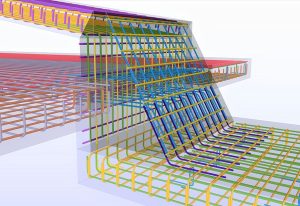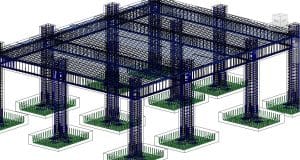
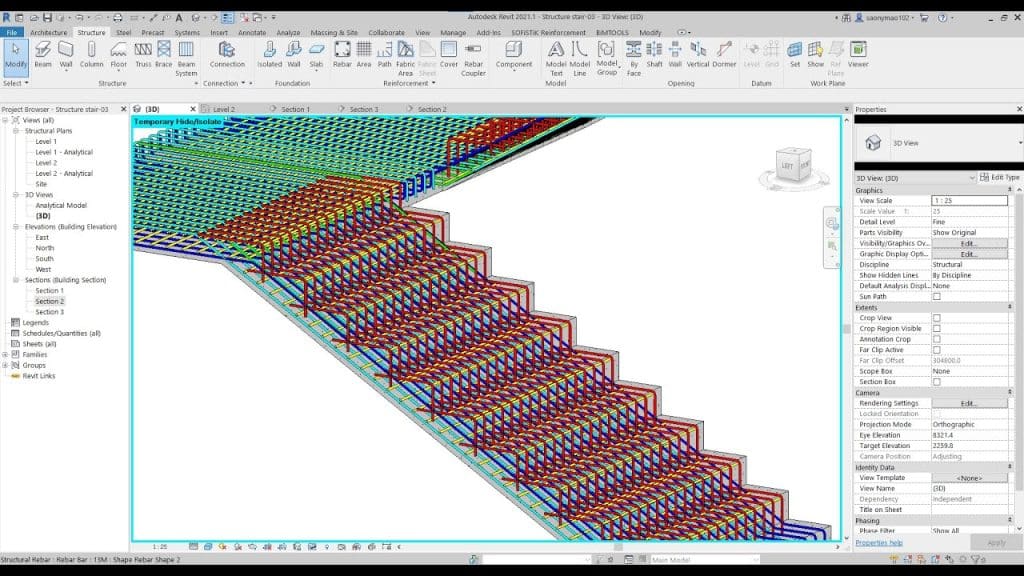
Rebar detailing can take anywhere from one or two business days for a simple concrete element to several weeks or months for a large commercial, industrial, or infrastructure project. The exact timeline depends on the project size, reinforcement complexity, drawing quality, required deliverables, revisions, coordination needs, and approval process.
A basic foundation or residential slab may require only a few placing drawings and bar schedules. In contrast, a high-rise building, hospital, bridge, or industrial facility may involve hundreds of drawings, phased concrete pours, congested reinforcement, multiple disciplines, and several review cycles.
Therefore, the complete rebar detailing timeline should include more than drawing production. It should also account for input review, RFIs, internal quality checks, engineer review, revisions, approvals, and final fabrication-ready delivery.
Estimated Rebar Detailing Timeline by Project Size
The following estimates provide a general planning guide. Actual turnaround times should be confirmed after reviewing the structural drawings, specifications, reinforcement quantity, deliverables, and construction schedule.
| Project type | Estimated detailing time | Typical scope |
| Single footing or simple concrete element | 1–2 business days | Limited reinforcement and a small drawing package |
| Residential slab or foundation | 2–5 business days | Standard footings, walls, slabs, and bar schedules |
| Small commercial project | 1–2 weeks | Multiple concrete elements and coordinated drawings |
| Mid-sized commercial building | 2–6 weeks | Foundations, walls, columns, beams, slabs, and phased submissions |
| Large commercial or industrial project | 6–12 weeks or longer | Complex reinforcement, multiple zones, BIM coordination, and staged releases |
| High-rise or infrastructure project | Several months | Large drawing volume, congested areas, repeated floors, approvals, and multiple packages |
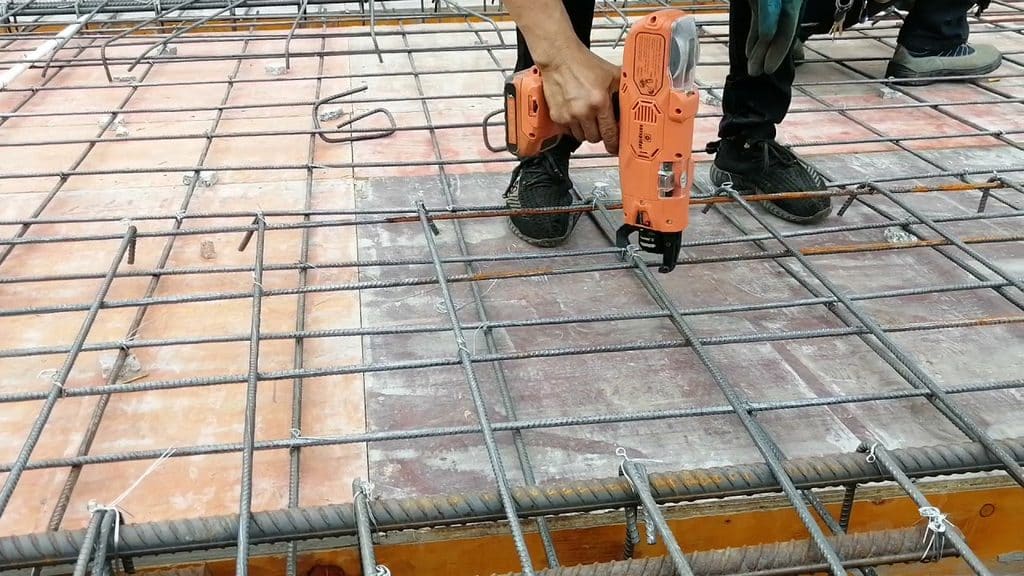
How to Calculate a Realistic Rebar Detailing Completion Date
A reliable completion date cannot be calculated from drafting hours alone. The schedule should begin when complete project information is available and include production, technical questions, checking, external review, revisions, approval, and fabrication lead time.
Confirm the Ready-to-Detail Date
The detailing period should begin only after the team receives the latest structural drawings, specifications, addenda, project standards, and construction priorities. If important information is missing, the proposed start date may not represent the actual production start.
Divide the Project Into Release Packages
Large projects should be divided according to the construction sequence. Foundations, walls, columns, beams, slabs, and special structures can have separate submission and approval dates. This allows urgent packages to reach fabrication while later areas remain in production.
Include Time for RFIs and Reviews
A realistic schedule should provide an allowance for technical questions, engineer review, coordinated comments, and revisions. These activities often take longer than expected and may not be fully controlled by the detailing provider.
Work Backward From the Concrete-Pour Date
The required drawing date should be calculated backward from the scheduled pour. The plan must allow enough time for final approval, fabrication, delivery, reinforcement placement, inspection, and corrections before concrete is placed.
| Schedule activity | Suggested planning allowance |
| Initial detailing and checking | Based on package size and complexity |
| RFI responses | 2–7 business days |
| Engineer or consultant review | 5–10 business days |
| Drawing revisions | 1–5 business days |
| Fabrication and delivery | Confirm with the rebar fabricator |
| Placement and inspection | Confirm with the site team |
These periods may overlap on well-managed projects. However, allowing time for each activity creates a more dependable rebar detailing timeline and reduces the risk of delaying fabrication or a scheduled concrete pour.
Key Factors That Affect Rebar Detailing Time
The time required to complete rebar detailing varies from one project to another. The following factors can affect the rebar detailing timeline by increasing production, coordination, review, or revision time.
Project Size and Drawing Volume
A larger project normally requires more drawings, schedules, checks, and submissions. However, total square footage or rebar tonnage does not tell the complete story. A smaller structure with irregular geometry and heavy congestion may take longer per ton than a larger building with repetitive floors.
Reinforcement Complexity
Standard slabs and footings can often be detailed faster than transfer slabs, heavily reinforced walls, curved structures, deep foundations, complex beam-column joints, or areas containing many embeds and penetrations. Complex reinforcement requires additional views, sections, checks, and coordination. It may also generate more technical questions before drawings can be completed.
Quality of the Source Drawings
Clear, current, and coordinated structural drawings help the detailing team work efficiently. Missing dimensions, conflicting details, incomplete specifications, or outdated revisions can interrupt production and create avoidable RFIs. The rebar detailing turnaround time can increase significantly when the team must repeatedly stop and wait for information.
Required Deliverables
A basic 2D placing-drawing package normally takes less time than a complete 3D reinforcement model with bar schedules, clash reviews, quantity reports, model exports, and project-specific file formats. The proposal should clearly identify whether the scope includes AutoCAD drawings, Revit or Tekla models, bar lists, ASA files, PDFs, DWGs, IFC files, quantity takeoffs, or other fabrication information.
Number of Review Cycles
The first submission is not always the final approved package. Engineer comments, client preferences, coordination changes, and revised design drawings may require several update cycles. The schedule should state how many review rounds are expected and how quickly each party must respond.
RFI Response Time
RFIs are commonly issued when the design information contains conflicts, omissions, or unclear requirements. A detailer may continue working on unaffected areas, but critical unanswered questions can stop the completion of certain drawings. If an RFI takes several days or weeks to resolve, the final delivery date may move even when the detailing team has completed all available work.
Construction and Pour Sequence
Large projects are often detailed in phases based on the construction schedule. Foundations may be released first, followed by columns, walls, beams, and floor slabs. Phased delivery can help fabrication and construction begin earlier. However, it also requires careful document control, repeated coordination, and updated information between releases.
Team Size and Available Capacity
A larger detailing team may complete a project faster by dividing the work into zones or packages. However, simply adding more people does not guarantee better results. The team still needs consistent standards, communication, checking, and project leadership.
Production Time vs. Approval Time
Production time is the period required to prepare, coordinate, and internally check the rebar drawings and schedules. Approval time is the period required for the engineer, contractor, or other authorized reviewer to examine the submission and provide comments or approval.
These periods should not be combined into one general promise. For example, a detailing team may complete a drawing package in five business days, but the engineer’s review and subsequent revisions may extend the complete process to two or three weeks.
A realistic schedule should separately show:
| Schedule stage | Responsibility |
| Input review | Detailing team |
| Initial drawing production | Detailing team |
| Internal QA/QC | Detailing team |
| RFI response | Engineer, contractor, or relevant consultant |
| Submission review | Engineer or authorized reviewer |
| Comment resolution | Detailing team and project stakeholders |
| Final approval | Engineer or authorized reviewer |
| Fabrication release | Contractor, fabricator, or designated project authority |
How Revisions Affect the Rebar Detailing Schedule
Not all revisions have the same impact. Minor comments, such as note corrections or presentation changes, may be completed quickly. However, changes to element dimensions, bar sizes, reinforcement layouts, openings, construction joints, or pour sequences may require extensive redetailing.
A major structural change can affect several connected drawings and schedules. For example, revising a column size may also change beam intersections, slab reinforcement, bar marks, quantities, and congestion details.
The schedule should distinguish between corrections to the detailer’s work and revisions caused by design or scope changes. Additional work should be documented through an agreed revision or change-order process.
How Can Clients Reduce Rebar Detailing Delays?
Clients can improve turnaround time by supplying complete and current project information before production begins. The detailing team should receive structural drawings, specifications, addenda, architectural references, reinforcement standards, drawing templates, submission dates, and construction sequences.
A clear communication process is equally important. The project should have one authorized point of contact, defined RFI response times, and an agreed method for issuing updated information. Reviewers should return one coordinated set of comments rather than separate and conflicting markups.
Maintaining a current drawing register also prevents the team from working with outdated information. When a new structural revision is issued, the affected drawings and required response should be identified immediately.
Can Rebar Detailing Be Completed Faster?
Yes, certain projects can follow an accelerated schedule, but the team must review the scope before confirming a rush delivery. Faster production may require additional detailers, parallel checking, extended work hours, phased submissions, and quick client responses.
The safest way to shorten the schedule is to prioritize critical construction packages. For example, foundations or the next planned concrete pour can be detailed first while later areas remain in production.
However, speed should not remove essential coordination or quality checks. Rushing drawings without confirming inputs can create fabrication errors, rejected submissions, field changes, and rework that delay the project more than the original detailing schedule.
What Information Is Needed for an Accurate Timeline?
Before confirming how long rebar detailing will take, the provider should review:
- Current structural and architectural drawings
- Project specifications and applicable standards
- Approximate reinforcement tonnage
- Number and type of concrete elements
- Required drawings, schedules, models, and file formats
- Drawing templates and client standards
- Construction sequence and pour schedule
- Submission milestones and critical deadlines
- Expected coordination responsibilities
- Anticipated RFI and review process
- Number of revision cycles
- Final fabrication or construction release requirements
How to Build a Realistic Rebar Detailing Schedule
Start by dividing the project into logical construction packages. Each package should have a planned start date, input deadline, initial submission date, review period, revision period, and required fabrication release date.
Allow sufficient time between drawing approval and the planned concrete pour for fabrication, delivery, site preparation, reinforcement installation, inspection, and corrections. The detailing completion date should not be the same as the construction date.
The schedule should also include time for RFIs and design changes. A small allowance can prevent one late response from affecting the entire fabrication and construction sequence.
Get a Project-Specific Rebar Detailing Timeline
Strand Consulting Corporation provides rebar shop drawings, placing drawings, bar bending schedules, reinforcement models, and coordinated construction documentation for contractors, engineers, fabricators, and project teams. To begin, send the current drawings, specifications, approximate tonnage, required deliverables, and key construction milestones. The team can review the project scope, identify missing information, and determine the appropriate detailing requirements.
Based on the project scope, the work can be divided into practical submission packages with a realistic production schedule. A project-specific timeline gives stakeholders a clearer basis for coordinating reviews and approvals with fabrication, delivery, installation, inspection, and concrete placement, helping keep reinforcement work aligned with the overall construction schedule.
Conclusion
So, how long does rebar detailing take? The timeline depends on the project’s size, complexity, and coordination requirements. Simple elements may take one to two business days, while mid-sized commercial projects can require several weeks. Large commercial, industrial, high-rise, and infrastructure projects may extend over several months when phased detailing, coordination, reviews, revisions, and approvals are included.
For a more accurate schedule, it is important to distinguish active detailing time from periods allocated for RFIs, design reviews, revisions, and approvals. Complete project information, clearly defined responsibilities, timely communication, coordinated feedback, and phased submissions can help maintain an efficient workflow while preserving the accuracy and quality of rebar detailing drawings.
Frequently Asked Questions
How long does rebar detailing take for a small project?
A simple footing, slab, or residential foundation may take approximately one to five business days. The final timeline depends on drawing quality, reinforcement complexity, required schedules, coordination needs, and the availability of complete structural information.
How long does rebar detailing take for a commercial building?
A small commercial project may take one to two weeks, while a mid-sized building may require two to six weeks. Large or complex commercial projects can take several months when phased submissions, reviews, and revisions are included.
Does the engineer’s approval time form part of the detailing schedule?
It should form part of the overall project schedule but remain separate from active detailing time. Engineer review, RFI responses, client comments, and final approval can extend delivery even after the initial drawings are complete.
Can rebar detailing be completed within 48 hours?
A limited and clearly defined package may be completed within 48 hours if the source drawings are complete and team capacity is available. A full project should not be promised within that period without reviewing its size, complexity, and deliverables.
What commonly delays rebar shop drawings?
Common delays include incomplete drawings, conflicting design information, unanswered RFIs, late revisions, unclear responsibilities, complex reinforcement, slow approvals, additional coordination requirements, and changes to construction or pour sequences.
When should rebar detailing begin?
Rebar detailing should begin after the structural design information for the relevant package is sufficiently complete. It should start early enough to allow for drawing production, checking, engineer review, revisions, fabrication, delivery, installation, and inspection before concrete placement.