

A delayed rebar delivery or an unapproved shop drawing can disrupt an entire concrete pour schedule. For contractors and fabricators, these setbacks often lead to idle crews, higher labor costs, material waste, and missed project deadlines. Therefore, planning reinforcement work in advance is essential to keep construction on track.
Rebar pour sequencing helps construction teams coordinate detailing, drawing approvals, fabrication releases, and material deliveries with planned concrete pours. By organizing reinforcement into pour-based packages, teams can prioritize critical work, avoid production conflicts, and ensure the right materials reach the site when needed.
This guide explains how to build a practical rebar release schedule, manage drawing approvals, coordinate fabrication, and keep reinforcement ready for each planned concrete pour.
What Is Rebar Pour Sequencing in Construction?
Rebar pour sequencing is the process of planning rebar detailing, fabrication, and delivery according to the concrete pour schedule. It ensures that each construction stage receives the required reinforcement on time.
Proper sequencing helps contractors prioritize work, reduce material delays, and improve coordination. It also keeps detailing, fabrication, and site activities aligned with construction needs.
Why Pour-Based Planning Matters
Poor sequencing can create several construction problems. Materials may arrive before the site has enough space to store them. In other cases, the crew may receive reinforcement for the wrong work area.
A clear pour sequence planning process helps teams:
- Prioritize reinforcement for upcoming concrete pours.
- Reduce delays caused by missing shop drawings.
- Coordinate fabrication with installation requirements.
- Improve material tracking and delivery planning.
- Identify drawing and design conflicts earlier.
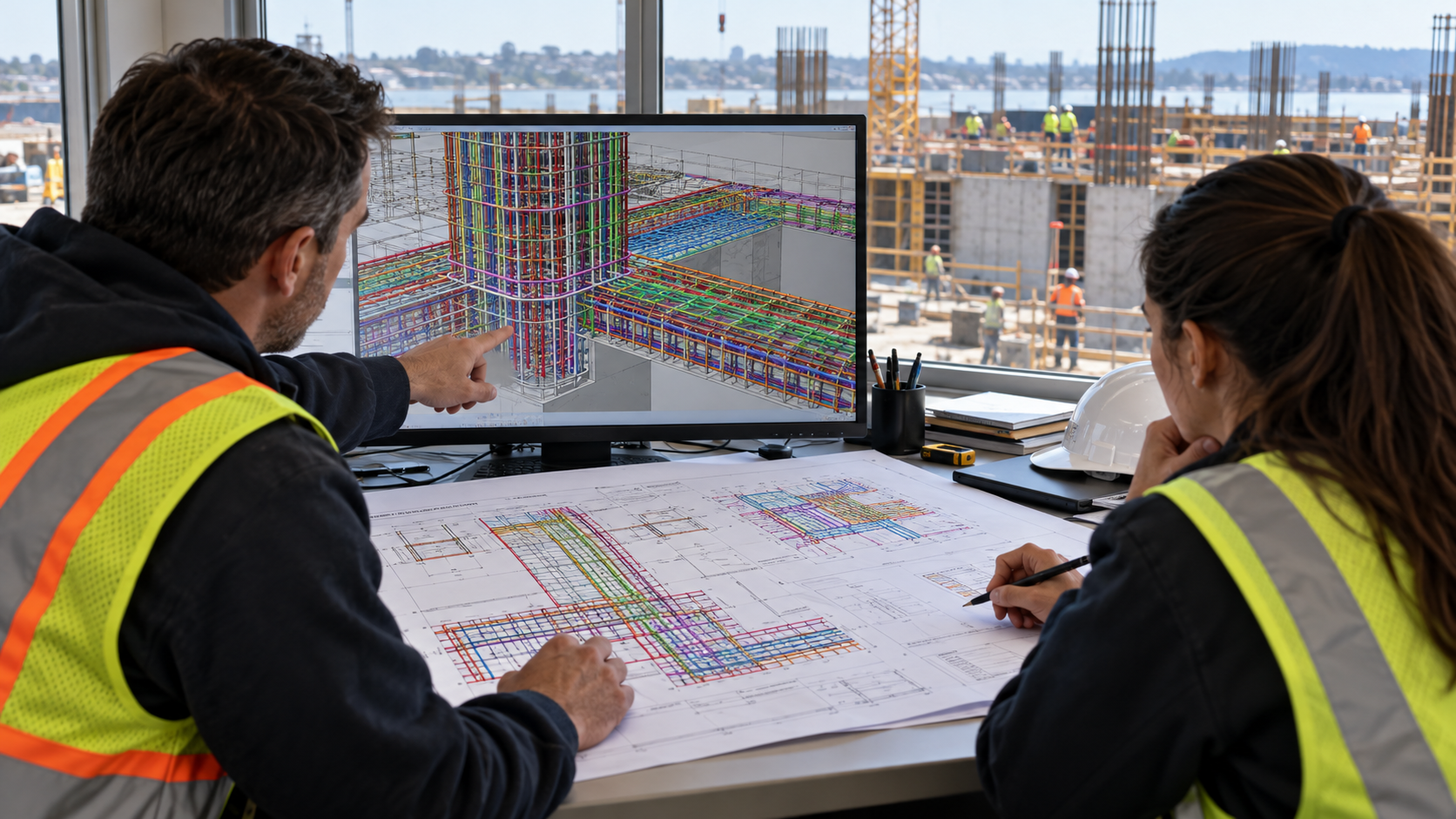
How to Organize Rebar Detailing Around the Pour Sequence
Organize rebar detailing into pour-based packages to ensure timely fabrication, smooth coordination, and fewer construction delays.
Identify Pour Boundaries and Construction Joints
Start by reviewing the project’s construction schedule and approved structural drawings. Identify the planned pour areas, construction joints, grid lines, and structural interfaces. Next, determine which reinforcement belongs to each package.
For example, a slab divided into three pours may require separate placing drawings and bar schedules for each section.
Check Reinforcement That Connects Multiple Pours
Some reinforcement extends beyond a single pour. Starter bars, dowels, lap splices, and mechanical couplers may connect two construction stages. These details need early coordination.
For example, starter bars for a future wall may need to be placed during an earlier foundation pour.
Create Clear Package Identification
Assign a unique reference to every package.
For example:
| Package ID | Construction area | Reinforcement scope |
|---|---|---|
| F-01 | Foundation Zone A | Footings and related starter bars |
| F-02 | Foundation Zone B | Footings and connecting reinforcement |
| W-01 | Core Wall Level 1 | Wall reinforcement and couplers |
| S-01 | Level 2 Slab Area A | Slab reinforcement and edge connections |
Use the same identifiers in the rebar shop drawings, bar bending schedules, release records, and delivery documents.
Planning a Rebar Detailing and Fabrication Release Schedule
A dependable rebar fabrication schedule should begin with the date the construction team needs reinforcement installed.
This method is often called backward scheduling or pull planning.
Step 1: Confirm the Required Installation Date
Rebar must arrive before the concrete pour to allow enough time for unloading, placement, tying, and inspection. Therefore, teams should set clear installation dates to plan fabrication releases and avoid delays.
Step 2: Confirm Fabrication and Delivery Lead Times
Next, contact the responsible fabricator to establish realistic production durations.
Fabrication time may depend on:
- Total reinforcement quantities
- Bar diameters and bending complexity
- Material availability
- Fabrication shop capacity
- Special coatings or mechanical connections
- Transportation arrangements
Step 3: Allow Time for Drawing Reviews
The detailing team must check reinforcement drawings before submission. Since reviews and revisions can take time, the rebar shop drawing approval schedule should include enough time for corrections and final authorization to avoid fabrication delays.
Step 4: Establish the Fabrication Release Deadline
The fabrication release deadline is the latest planned date when an authorized package should reach the fabricator to support the required delivery. This deadline should account for production lead time, delivery requirements, and reasonable schedule allowances.
What Should Be Checked Before Releasing Rebar for Fabrication?
Before releasing rebar for fabrication, teams must check all drawings and project details. Once bars are cut and bent, changes can increase costs and cause delays.
- Check Project Details: Review all drawings and requirements before fabrication to avoid costly changes and delays.
- Confirm Approved Drawings: Verify the latest drawing revisions, dates, and updates to prevent errors.
- Review Bar Bending Schedule (BBS): Check bar sizes, shapes, lengths, and quantities for accuracy.
- Resolve Critical RFIs: Address any design conflicts or coordination issues before releasing reinforcement.
- Complete Release Checklist: Confirm material specifications, construction joints, package details, and final approvals before fabrication begins.
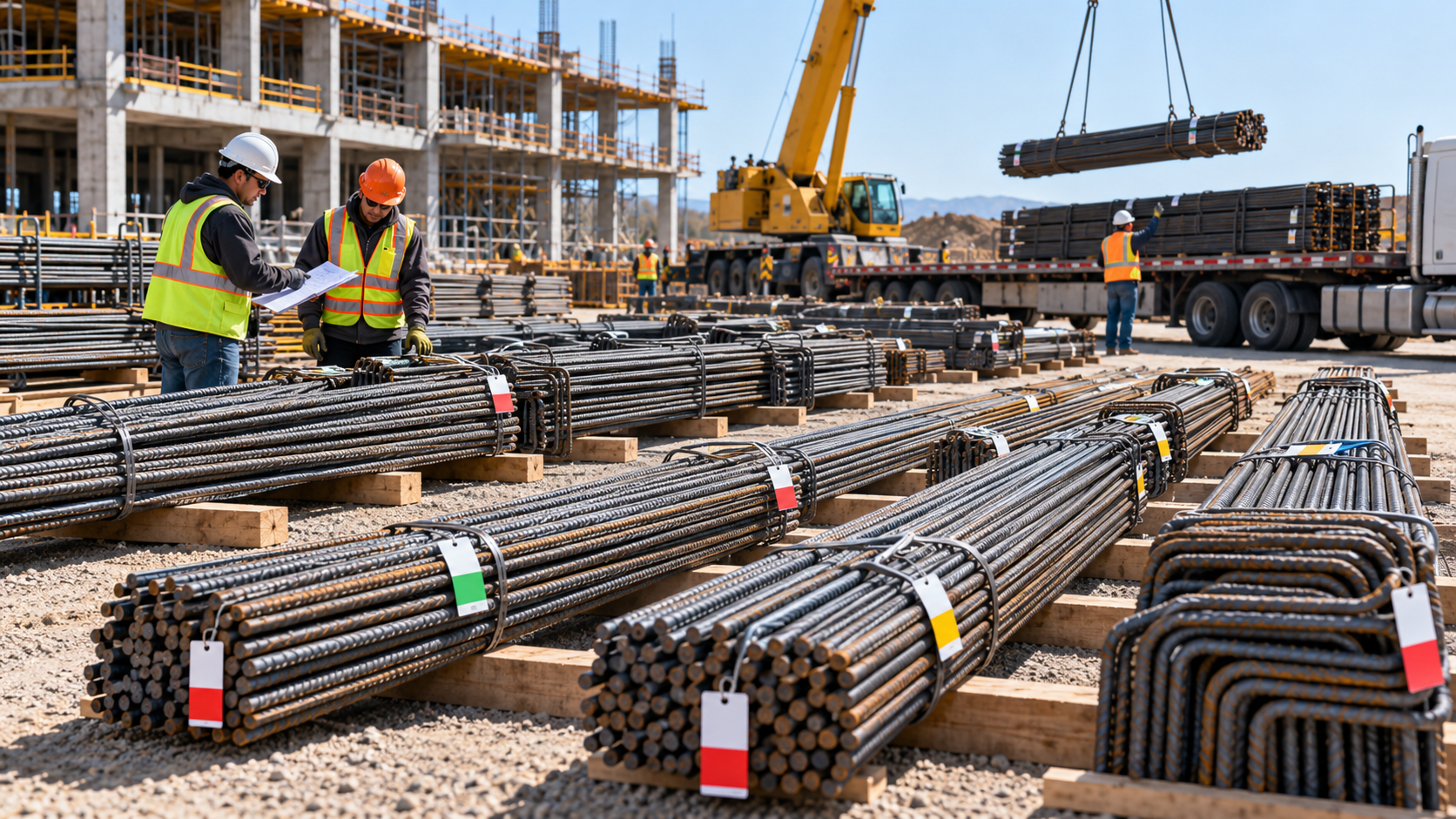
How to Coordinate Rebar Fabrication With Site Deliveries
Proper coordination ensures that fabricated rebar reaches the construction site when needed. Therefore, contractors and fabricators should align production schedules with concrete pour priorities to avoid delays.
Clear labeling also improves rebar delivery sequencing. Each bundle should include package IDs, bar marks, and quantities to help site crews identify materials quickly and reduce unnecessary handling.
Finally, delivery schedules should consider site access, storage space, and equipment availability. Coordinating deliveries with installation needs prevents overcrowding and keeps construction activities moving smoothly.
Managing Partial Fabrication Releases and Late Drawing Revisions
Partial fabrication releases allow construction teams to begin producing approved rebar packages while other drawings are still under review. This helps maintain progress without waiting for the entire project documentation.
Before releasing any package, teams must verify approved drawings, bar bending schedules, and material requirements. They should also confirm that unresolved design issues will not affect the released reinforcement.
Late drawing revisions can change bar sizes, quantities, or placement details. Therefore, detailers must communicate updates quickly to fabricators and site teams to prevent errors, material waste, and costly rework.
A clear revision tracking system helps teams monitor drawing changes, fabrication status, and approvals. This improves coordination and ensures that each rebar package follows the latest authorized project requirements.
How to Track Rebar Fabrication Release Status
A fabrication release register helps project managers track drawing approvals, production progress, and delivery dates. It also highlights delayed packages so teams can take action before upcoming concrete pours.
| Package ID | Drawing Status | Fabrication Status | Delivery Date |
|---|---|---|---|
| F-01 | Approved | In progress | Day 15 |
| F-02 | Under review | On hold | Day 20 |
| W-01 | Approved | Completed | Day 22 |
Common Rebar Pour Sequencing Problems
Poor rebar sequencing can cause fabrication errors, material waste, and construction delays. Here are seven common problems to avoid:
- Missing Starter Bars: Poor coordination between pour packages can leave required reinforcement missing.
- Incomplete Fabrication Information: Unapproved drawings can lead to incorrect bar sizes and quantities.
- Wrong Delivery Order: Early or incorrect deliveries create storage problems and extra handling.
- Poor Communication: Teams using outdated drawings may cause fabrication and installation errors.
- Delayed Drawing Approvals: Slow reviews can delay fabrication and concrete pours.
- Construction Joint Conflicts: Missing joint details can cause reinforcement placement issues.
- Inaccurate Bar Bending Schedules: Incorrect bar dimensions or quantities lead to material waste and rework.
How to Keep Rebar Releases on Schedule When Pour Dates Change
Construction schedules rarely remain unchanged from start to finish. Weather, design revisions, inspection issues, and other site activities can move planned concrete pours.
Review Upcoming Pours Regularly
Project managers should use a short-term lookahead to track upcoming rebar approvals, deliveries, and installation needs. This helps teams identify delays early and keep work on schedule.
Recheck Fabrication Priorities
If Pour B takes priority over Pour A, the team must review drawings, fabrication capacity, and delivery plans before adjusting production schedules.
Communicate Changes to Every Responsible Team
Detailers, fabricators, and site teams should receive updated schedules and clear instructions. Assigning responsibilities also helps prevent confusion and keeps everyone working with the latest plan.
Professional Rebar Detailing Supports Better Release Planning
Successful rebar pour sequencing requires accurate placing drawings, detailed bar bending schedules, and organized project records. These documents help construction teams plan reinforcement activities, reduce errors, and keep fabrication aligned with concrete pour schedules.
Professional rebar detailing services help contractors and fabricators prepare reinforcement drawings and organize fabrication packages. This ensures that each construction stage receives the correct reinforcement according to project requirements.
Detailers also identify reinforcement connections between different pours and manage drawing revisions. As a result, construction teams can reduce missing bars, avoid costly rework, and improve coordination between fabrication and installation.
In addition, rebar estimating and takeoff support helps project teams calculate material quantities and plan resources. Strand Consulting Corporation provides these services to support reliable fabrication planning, timely deliveries, and smoother construction operations.
Conclusion
Effective rebar pour sequencing helps contractors coordinate reinforcement detailing, fabrication, and deliveries with planned concrete pours.
A successful process begins with clear package boundaries and realistic release dates. It also requires accurate shop drawings, controlled revisions, and communication between detailers, fabricators, and site teams.
When these activities follow the same construction plan, teams can reduce avoidable material problems, improve coordination, and support more reliable concrete pour schedules.
For construction teams that need organized reinforcement documentation, Strand Consulting Corporation offers rebar detailing and related technical support services.
Planning reinforcement work for an upcoming project? Contact Strand Consulting Corporation to discuss your detailing scope, drawings, and release requirements.
Frequently Asked Questions
What is the main purpose of rebar pour sequencing?
The main purpose is to coordinate reinforcement detailing, fabrication, and delivery with the order of concrete pours. It helps construction teams receive the correct reinforcement when the site needs it.
How do you determine the right rebar fabrication release date?
Start with the required reinforcement installation date. Then work backward through delivery, fabrication, drawing review, and detailing activities. Use confirmed lead times and the project’s approval requirements to set release deadlines.
Can rebar fabrication begin before the entire project is approved?
A defined package may enter fabrication before all project packages are complete if the applicable review and authorization procedures allow it. The released package must have sufficient approved information, and unresolved changes must not affect its reinforcement.
What information should a rebar release package include?
A typical package includes the current placing drawings, bar bending schedules, package identification, applicable material requirements, revision information, and required release authorization.
How can BIM help with rebar pour sequencing?
BIM and reinforcement modeling tools can help teams visualize bar arrangements, identify congested areas, and coordinate reinforcement across construction zones. Depending on the modeling workflow, they can also support drawing and schedule production.
What is the difference between a detailing schedule and a fabrication schedule?
A detailing schedule tracks drawing preparation, checks, submissions, and revisions. A fabrication schedule tracks when authorized reinforcement will be cut, bent, prepared, and made ready for delivery. Both should support the overall construction schedule.