
Key Takeaways
- A fabrication-ready drawing package converts engineering intent into clear manufacturing instructions.
- It may include general arrangement, shop, part, assembly, and erection drawings.
- Bills of materials, weld details, CNC files, and revision records support accurate production.
- Drawings must match the approved model, calculations, specifications, and project standards.
- Quality checks and revision control help prevent errors, delays, material waste, and rework.
- Strand Consulting Corporation provides coordinated documentation to support efficient fabrication.
A fabrication-ready drawing package is a coordinated set of technical drawings, material information, production files, and supporting documents that gives a fabricator the information needed to manufacture and assemble a product or structure.
Unlike an early design sketch, a fabrication package converts the approved engineering intent into clear production instructions. It can include shop drawings, part drawings, assembly details, bills of materials, welding information, CNC files, finishes, tolerances, and revision records.
A complete package helps engineers, contractors, and fabricators work from the same information. As a result, it reduces questions during production, limits material waste, supports accurate pricing, and lowers the risk of expensive rework.
What Makes a Drawing Package Fabrication-Ready?
A drawing is only fabrication-ready when it provides enough accurate and coordinated information for workshop teams to manufacture each component without making assumptions.
A reliable package should define dimensions, materials, plate thicknesses, section sizes, hole locations, welds, bolted connections, part marks, finishes, manufacturing tolerances, and applicable project standards.
All details must match the approved model, calculations, design drawings, and specifications. Any conflict should be resolved before the drawings are released for production.
What Is Included in a Fabrication-Ready Drawing Package?
The exact deliverables vary according to the project, material, fabrication process, and client requirements. However, a complete fabrication drawing package commonly includes the following components.
General Arrangement Drawings
General arrangement drawings show how major components fit together by defining dimensions, elevations, grids, orientations, and connection locations, helping fabricators understand the assembly and contractors coordinate it with surrounding elements.
Detailed Shop Drawings
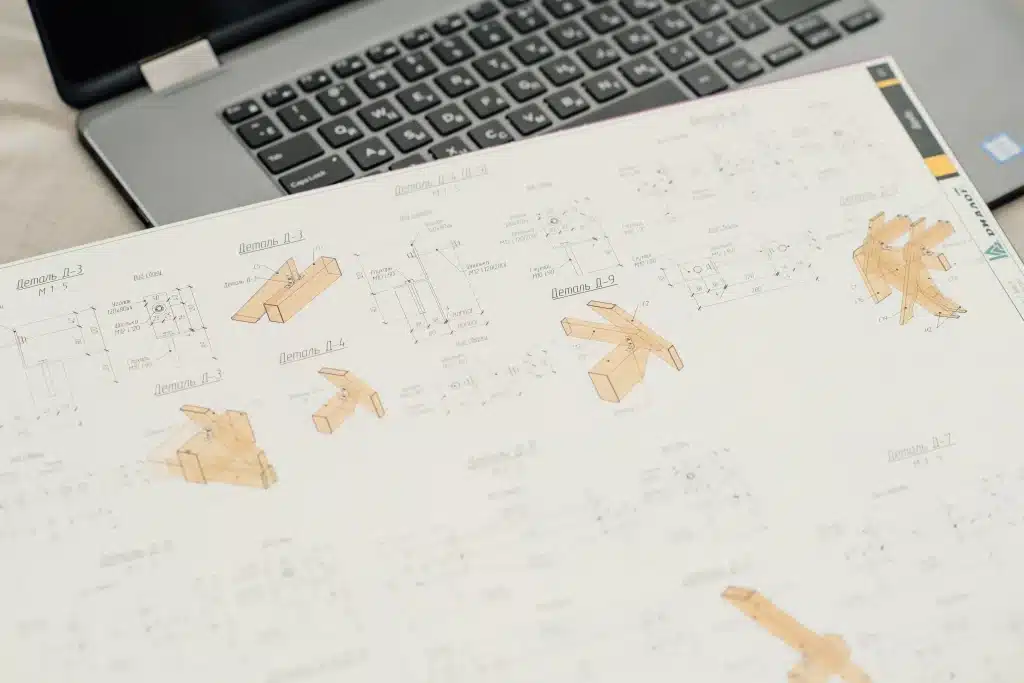
Shop drawings provide detailed production information, including dimensions, materials, welds, bolts, holes, plates, stiffeners, and connections, helping workshop teams manufacture each assembly accurately, even when the geometry is complex.
Individual Part Drawings
Part drawings provide the part number, material grade, dimensions, quantity, thickness, hole pattern, cutting profile, and machining details needed to prepare individual components before assembly.
Assembly Drawings
Assembly drawings show how individual parts connect to create a completed unit. They normally identify part marks, assembly dimensions, weld requirements, and connection locations. These drawings help fabricators position each component correctly and verify the finished assembly before it leaves the workshop.
Erection Drawings
Where required, erection drawings show how fabricated assemblies will be positioned and connected on site. They may include grid references, levels, orientation marks, field connections, and installation sequences. However, erection drawings should not be treated as a substitute for an approved erection method statement, lifting plan, or temporary works design.
Bill of Materials
A bill of materials, or BOM, lists the materials and components required for fabrication. Depending on the project, it may include:
- Part and assembly marks
- Material grades
- Section or plate sizes
- Quantities
- Individual and total weights
- Bolt and fastener information
- Finish or coating requirements
A coordinated bill of materials for fabrication supports procurement, stock control, cost estimation, and production planning.
CNC and Machine-Readable Files
Modern workshops use NC1, DXF, DSTV, STEP, and other machine-compatible files to transfer geometry directly to cutting, drilling, punching, bending, and profiling equipment, but these files must be checked against the issued drawings to prevent production errors.
Welding and Connection Details
Weld and connection details must clearly specify weld types, sizes, lengths, locations, bolts, holes, plates, stiffeners, and relevant standards to prevent delays, inconsistent workmanship, and fabrication errors.
Revision Register and Drawing Index
A drawing register lists every document included in the package and shows its current revision and issue status. This helps prevent the workshop from using superseded information. Each revision should clearly identify what changed, when it changed, and why it changed. Strong revision control is essential when several project stakeholders are reviewing or updating the design.

Design Drawings vs. Fabrication Drawings
| Comparison | Design Drawings | Fabrication Drawings |
|---|---|---|
| Purpose | Communicate engineering intent and performance requirements | Provide instructions for manufacturing and assembly |
| Information | Overall geometry, structural requirements, and connection capacity | Plate dimensions, hole layouts, bolts, welds, material grades, and assembly marks |
| Primary Users | Engineers, architects, and designers | Fabricators, detailers, and workshop teams |
| Level of Detail | General design and structural information | Component-level production details |
| Changes | Establish the approved design requirements | Must not introduce unapproved design changes |
| Clarification | Defines the intended result | Unclear or conflicting details must be referred to the responsible engineer |
How a Fabrication Drawing Package Is Developed
A fabrication drawing package is developed by reviewing project requirements, creating coordinated models, preparing detailed drawings, completing quality checks, and incorporating approval comments before release for production.
Review of Source Information
The process begins with a review of the available design drawings, specifications, models, schedules, and engineering calculations. The detailing team identifies missing information, conflicts, and coordination requirements before preparing production documents.
Development of the Coordinated Model
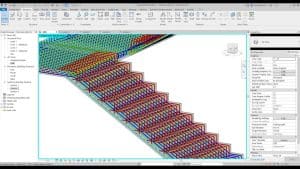
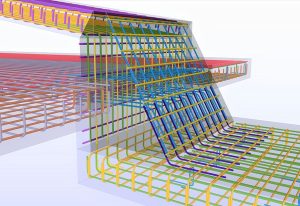
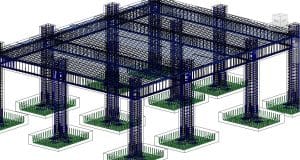
A detailed 3D model may be created using software such as Tekla Structures, SolidWorks, Advance Steel, Revit, or another project-specific platform. The model defines the geometry, materials, connections, part marks, and assembly relationships. It may also help detect clashes that are difficult to identify in two-dimensional drawings.
Preparation of Shop and Part Drawings
Once the model has been coordinated, individual part and assembly drawings are produced. Dimensions, sections, connection details, weld symbols, and material information are added according to fabrication requirements.
Internal Quality Review
The drawings should be reviewed for dimensional accuracy, buildability, material consistency, drawing clarity, and compliance with project standards. A good quality-control process checks both the drawings and the model. It also verifies that part marks, quantities, BOM data, and CNC files match across the complete package.
Client or Engineer Review
Drawings may then be submitted for review and approval. Comments should be recorded, addressed, and incorporated into the next revision. A reviewed or approved drawing is not automatically released for fabrication. The package must carry a clear status such as “For Approval,” “For Construction,” or “For Fabrication.”
Final Release for Production
After comments and technical issues have been resolved, the final fabrication-ready drawing package is issued with an updated drawing register, revision history, BOM, and required digital production files.
Information Required Before Detailing Begins
One area frequently overlooked is the quality of the source information. Even an experienced detailing team cannot produce reliable fabrication drawings from incomplete or conflicting inputs.
Before work starts, the following information should be available:
- Approved architectural and structural drawings
- Engineering specifications and design criteria
- Connection design responsibilities
- Material grades and product standards
- Required drawing and model formats
- Fabrication equipment limitations
- Welding and bolting specifications
- Coating or surface-treatment requirements
- Project coordinates, grids, and reference levels
- Submission stages and approval responsibilities
Quality-Control Checklist Before Release
Before releasing a package for manufacturing, the detailer and fabricator should confirm that:
- All drawing dimensions are complete and consistent.
- Part marks match the assembly drawings and BOM.
- Material grades and section sizes are correct.
- Hole locations agree across connected components.
- Weld and bolt specifications are clearly shown.
- CNC files match the approved drawing revision.
- Coating and finish requirements are identified.
- Drawing statuses are clearly displayed.
- Superseded files have been removed from production folders.
- Outstanding technical queries have been resolved.
How Fabrication-Ready Drawings Reduce Errors and Delays
A coordinated drawing package gives workshop teams clear production information, helps procurement teams order accurate material quantities, and allows production managers to plan the work more effectively. Reliable steel fabrication drawings reduce incorrect cutting and drilling, misaligned holes, missing components, welding discrepancies, material overordering, and site-fit problems.
Although detailed drawing preparation requires time, it helps prevent production interruptions, rework, and replacement costs. Investing in accurate fabrication drawings is generally far less expensive than correcting mistakes after materials have been cut or assemblies have been delivered to the construction site.
Digital File Management and Revision Control
A technically accurate package can still create problems when files are poorly managed. Clear naming conventions, revision codes, issue dates, and document statuses should be used across drawings, models, BOMs, and CNC data.
When a revision is issued, all related deliverables must be updated together. Changing a shop drawing without updating its associated CNC file or material list can send conflicting information to the workshop.
For this reason, the final package should be transferred through a controlled document-management system or organized project folder rather than through scattered email attachments.
Common Problems in Incomplete Fabrication Packages
Several problems can prevent a package from being genuinely ready for production:
- Missing or conflicting dimensions
- Unclear connection details
- Incomplete weld information
- Mismatched drawing and model revisions
- Incorrect material specifications
- Unresolved clashes
- Missing manufacturing tolerances
- Inaccurate bills of materials
- Unverified CNC files
- Unclear approval or issue status
Choosing a Fabrication Drawing Service
When choosing a steel detailing or fabrication drawing provider, look beyond the appearance of sample drawings. The provider should understand fabrication methods, project coordination, industry standards, and document control.
Confirm that the service includes 3D modelling, clash detection, shop and assembly drawings, erection drawings, bills of materials, CNC or DSTV files, quality checks, and revision management.
The project scope should also define the number of review cycles, responsibility for connection engineering, available fabrication support, and required delivery formats.
Final Thoughts
A fabrication-ready drawing package connects engineering intent with workshop operations by providing the drawings, material data, connection details, production files, and revision controls needed for efficient manufacturing.
Strand Consulting Corporation delivers coordinated inputs, accurate modelling, clear documentation, careful quality checks, and controlled revisions to help fabricators improve accuracy, reduce interruptions, and avoid unnecessary rework.
Frequently Asked Questions
What files are typically included in a Fabrication-Ready Drawing Package?
A Fabrication-Ready Drawing Package may include general arrangement drawings, shop drawings, part and assembly drawings, bills of materials, erection details, CNC files, welding information, and an updated revision register. The exact contents depend on the project scope, fabrication process, and client requirements.
How do I know when a Fabrication-Ready Drawing Package is ready for production?
A Fabrication-Ready Drawing Package is ready when dimensions, materials, connections, welds, tolerances, quantities, and revisions have been checked. Technical questions should also be resolved, and the drawings and production files should clearly show their approved fabrication status.
Can a Fabrication-Ready Drawing Package be created from an existing 3D model?
Yes. A coordinated 3D model can be used to develop a Fabrication-Ready Drawing Package, including shop drawings, material lists, assembly information, and machine-readable files. However, the model should first be reviewed for accuracy, coordination, and clashes before production documents are issued.
What information is needed to prepare a Fabrication-Ready Drawing Package?
Clients should provide approved design drawings, specifications, material requirements, connection criteria, project standards, preferred file formats, fabrication limitations, and clear review requirements. Complete source information helps the detailing team prepare an accurate Fabrication-Ready Drawing Package without relying on assumptions.
Why is revision control important in a Fabrication-Ready Drawing Package?
Revision control ensures that every drawing, bill of materials, model, CNC file, and supporting document reflects the same approved project information. Strong revision control keeps the Fabrication-Ready Drawing Package coordinated and helps prevent outdated information from reaching the workshop.
How does Strand Consulting Corporation support fabrication projects?
Strand Consulting Corporation supports the preparation of a coordinated Fabrication-Ready Drawing Package through accurate modelling, detailed documentation, quality reviews, revision management, and fabrication-focused coordination. This helps reduce production questions, avoid preventable errors, and improve fabrication readiness.