Summary
Industrial plants and power plants are some of the most complex structures built today. They carry heavy machines, run around the clock, and face heat, vibration, and chemical exposure every day. Rebar detailing for industrial and power plants is the process that turns a structural engineer’s design into real, working drawings that fabricators and ironworkers can use on site. This article walks through what that process looks like, what it produces, and why every detail matters on these high-stakes projects.
What Is Rebar Detailing and Why Does It Matter Here
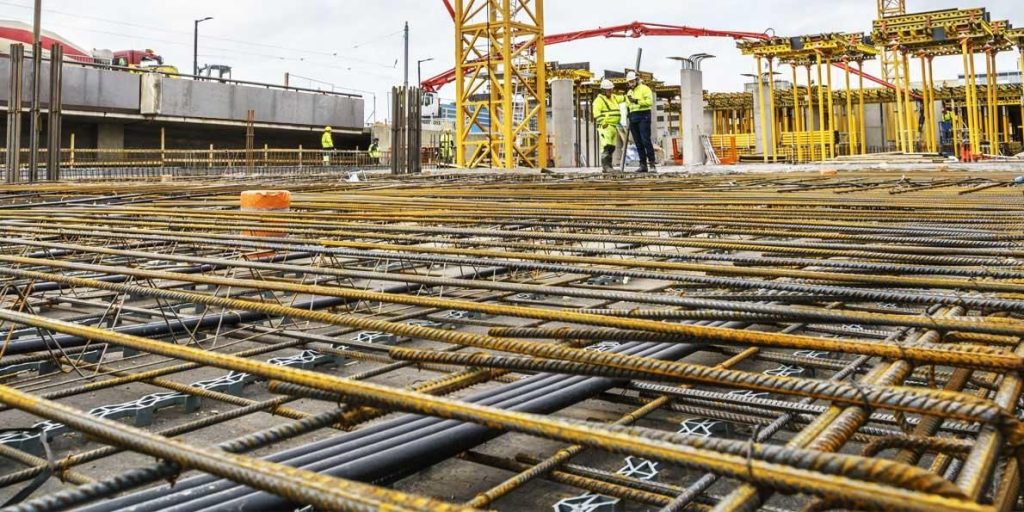
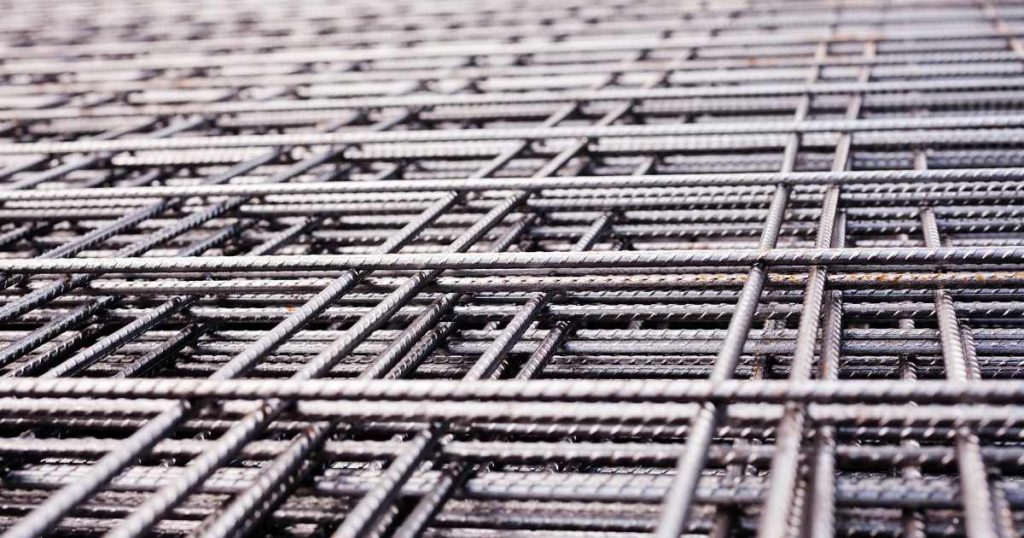
Rebar is the steel bar placed inside concrete to give it strength. Concrete handles pressure well on its own. But it cracks and breaks when pulled or bent. Steel rebar resists those forces. Together, concrete and rebar make reinforced concrete, which is the material that holds up nearly every major industrial structure in the world.
Rebar detailing is the work of creating precise drawings and schedules that show fabricators and site workers exactly how to cut, bend, and place each steel bar. This is not design work. The structural engineer designs the structure and decides what strength is needed. The rebar detailer turns that design into real instructions that can be used in the field.
For a house or a small office building, this work is fairly simple. For a power plant or an oil refinery, it is anything but. The loads are heavier. The structures are more complex. The margins for error are much smaller. One wrong bar size or a missed splice length can cause serious problems down the road.
How Industrial Projects Are Different from Standard Construction
Not every concrete structure needs the same level of care. A parking garage and a turbine foundation are both made of reinforced concrete, but they are completely different in how they behave.
Industrial facilities run heavy equipment. Turbines, compressors, boilers, and generators create both static weight and dynamic forces from moving parts. These forces travel into the concrete foundations beneath them. The rebar inside those foundations must be placed in a way that absorbs and resists those forces without cracking or shifting over time.
Power plants also deal with heat. Steam pipelines, cooling systems, and fuel combustion all create thermal changes that make concrete expand and contract. The reinforcement detailing must account for this movement so the structure does not develop stress cracks over years of operation.
Chemical plants and refineries add another layer. The concrete floor and wall systems in these facilities often hold spills and leaks. The rebar inside must be placed with the right amount of concrete cover so that moisture and chemicals do not reach the steel and cause corrosion.
These factors make rebar detailing for industrial and power plants a job that requires real experience with heavy industrial construction, not just general detailing skills.
The Main Deliverables: What Gets Produced
A rebar detailing project does not produce just one document. It produces a package of drawings and schedules that work together. Here are the key items in that package.
Shop Drawings
Shop drawings tell the fabricator how to cut and shape each bar. They show the bar mark number, its length, the shape of any bends, the bend angles, and the steel grade. For a large industrial project, this package can include hundreds of drawings covering foundations, slabs, walls, columns, equipment pads, and special structures like containment walls or chimney bases.
Placement Drawings
Placement drawings tell the ironworker on site where each bar goes. They show the spacing between bars, how many layers are needed, how far from the surface each bar should sit, and where bars in different layers overlap. These drawings guide the crew during steel placement.
Bar Bending Schedule (BBS)
The bar bending schedule is a table that lists every reinforcing bar on the project. It includes the bar number, shape code, dimensions, total length, how many are needed, and the total weight. Fabricators use this to cut and bend every bar before it arrives on site. Quantity surveyors use it to check material costs. Site teams use it to track deliveries.
3D Rebar Model
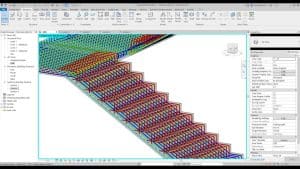
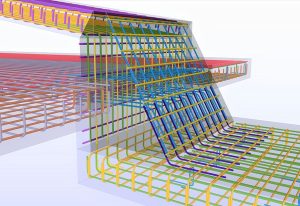
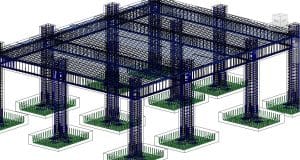
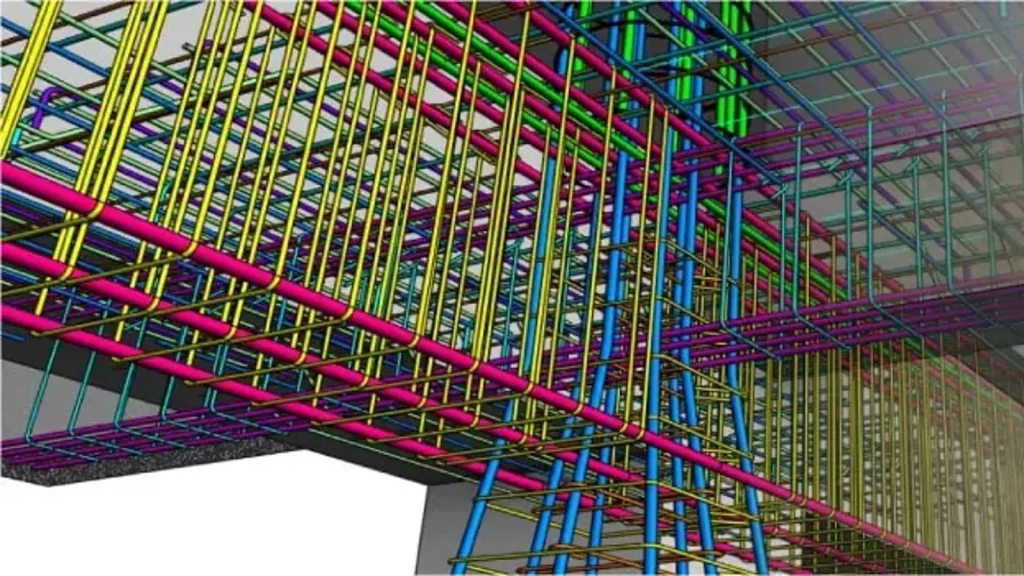
Most industrial and power plant projects now require a 3D BIM rebar model in addition to 2D drawings. Tools like Tekla Structures and Autodesk Revit allow detailers to model every bar in three dimensions. This makes it possible to spot clashes between reinforcing steel, anchor bolts, conduit, and structural steel before the concrete is ever poured. Finding a clash in a model takes minutes to fix. Finding it on site takes days and costs real money.
Key Structural Elements That Need Specialized Reinforcement
Industrial plants and power stations contain structural elements that rarely appear in commercial buildings. Each one has its own detailing requirements.
| Structural Element | What It Does | Special Detailing Need |
| Turbine and machine foundations | Carries rotating equipment | Dense rebar grids to resist dynamic load and vibration |
| Pile caps | Transfers column loads to piles below ground | Multiple rebar layers in tight zones |
| Equipment pedestals | Supports pumps, vessels, and heat exchangers | Anchor bolt coordination with rebar layout |
| Pipe rack bents | Holds process piping across large spans | Seismic and thermal load detailing |
| Containment walls and floors | Holds chemical or fuel spills | Continuous reinforcement at corners and joints |
| Cooling tower foundations | Carries thermal and wind loads | Long-term expansion and contraction detailing |
| Chimney and stack bases | Carries tall vertical structures | Seismic detailing and base connection design |
Each of these elements requires the detailer to understand not just how to draw bars, but how the structure works under load. That is where real experience shows.
Rebar Products Used in Industrial and Power Plant Projects
Not all reinforcing steel is the same. The right type depends on the environment the structure will be in.
| Rebar Type | Where It Is Used | Key Property |
| Standard deformed bar (ASTM A615) | General industrial concrete structures | High strength, widely available |
| Low-alloy weldable bar (ASTM A706) | Seismic zones, welded connections | Controlled chemistry for reliable welding |
| Epoxy coated rebar | Exposure to salts or chemical splash | Coating protects steel from corrosion |
| Galvanized rebar | Coastal plants and marine industrial sites | Zinc coating resists salt and moisture |
| Stainless steel rebar | Chemical plants, wastewater facilities | Highest corrosion resistance, long service life |
| Mechanical splice couplers | Congested zones, thick foundations | Connects bars without lap overlap |
Choosing the right rebar type before detailing begins saves time. Changing it after drawings are produced means redoing the cover calculations and splice details throughout the drawing set.
Code Standards That Apply
Every industrial and power plant project must meet specific code standards. The codes that apply depend on the project location, the client’s requirements, and the type of facility.
| Code or Standard | Who Issues It | What It Covers |
| ACI 318 | American Concrete Institute | Main concrete design code in the USA |
| ACI 349 | American Concrete Institute | Nuclear safety structures |
| CRSI Manual of Standard Practice | Concrete Reinforcing Steel Institute | Detailing rules and standard practices |
| ASTM A615 / A706 | ASTM International | Material specs for reinforcing steel |
| AASHTO LRFD | Transportation Officials | Civil and bridge structures |
| BS EN 1992 (Eurocode 2) | European Committee | Structural concrete in Europe and the UK |
| IS 456 | Bureau of Indian Standards | Structural concrete in India |
Nuclear power plants add a further layer through ACI 349. This code adds material traceability requirements, tighter inspection protocols, and documentation standards that go well beyond standard commercial construction. Detailers working on nuclear projects need specific experience with these requirements.
The Planning Process Before Any Drawing Starts
Good rebar detailing for industrial and power plants does not begin with software. It begins with planning. The steps below happen before a single bar is drawn.
Project scheduling comes first. Industrial projects have long fabrication lead times. Rebar must arrive on site in the right order for each concrete pour. The detailing team maps out when each area’s drawings must be finished so fabrication can start on time.
Drawing review is next. The detailing team studies the structural engineer’s design drawings carefully. They check for missing information, unclear details, and areas where the design may be hard to build. If something is unclear, they raise a formal question called an RFI (Request for Information) to get a written answer from the engineer before drawing anything.
Constructability review follows. A drawing can be technically correct but still hard to build in the field. Dense rebar zones may make it impossible to consolidate concrete properly. Congested anchor bolt areas may conflict with the main reinforcing mat. Experienced detailers spot these issues during review so they can be resolved before fabrication begins, not during construction.
Why 3D BIM Coordination Is Now Standard Practice
Industrial plants are full of competing elements in the same physical space. Rebar, anchor bolts, conduit, structural steel, and embedded plates all share the same concrete element. In a 2D drawing, these conflicts are almost impossible to catch by eye.
A 3D BIM rebar model makes every conflict visible before a single bar is bent. Clash detection software checks the model automatically and flags any place where two elements occupy the same space. The detailer resolves each clash at a desk in a few minutes. The same clash on a job site stops ironworkers, delays the pour, and may require pulling already-placed steel.
For owners and EPC contractors running large industrial or power plant projects, requiring a coordinated 3D rebar model is no longer optional. It is the standard expectation. The return in avoided field changes far outweighs the cost of producing the model.
Practical Tips for Getting Industrial Rebar Detailing Right
These are real lessons from industrial construction projects, not theoretical advice.
Start detailing in parallel with design. Large industrial projects have tight schedules. Waiting for design to be 100 percent complete before starting detailing adds weeks to the fabrication schedule. A phased approach, where early-priority areas are detailed while design on remaining areas continues, keeps the project moving.
Request phased delivery of the BBS. On a large project, getting one large bar bending schedule near the end of design is too late to manage fabrication well. Ask for delivery by area or structure so fabrication can start as each section is detailed.
Confirm the rebar type before detailing begins. Epoxy coated, galvanized, and stainless steel bars all have different development lengths and cover requirements. Confirming the type before detailing starts avoids rework later.
Set up the RFI process before drawings are issued. Agree on how questions will be submitted, who will answer them, and how long responses will take. Slow RFI responses are one of the most common reasons industrial detailing schedules slip.
Define BIM LOD requirements upfront. LOD 400 (construction-ready level of detail) is typically required for industrial rebar models. Confirming this at project start avoids disagreements about model content at delivery.
How Strand Consulting Corporation Handles Industrial Projects
Strand Consulting Corporation has been delivering rebar detailing for industrial and power plants since 2008. Founded in Hauppauge, New York, the firm is 100 percent women-owned and has grown from a single-contractor start to a team of over 30 civil engineers working across the USA, Canada, Europe, Sweden, and the UK.
The team works in Tekla Structures and Autodesk Revit to produce construction-ready 3D BIM rebar models alongside shop drawings and bar bending schedules. Detailers at Strand Co are trained civil engineers, which means they understand structural intent, ask the right questions during drawing review, and produce drawings that actually work on site.
The New York office manages client relationships and project coordination. The Pune team handles technical detailing production and makes fast turnaround possible on time-sensitive industrial projects.
Strand Co serves general contractors, EPC firms, structural engineers, and rebar fabricators. Whether the job is a turbine foundation, a containment structure, a pipe rack system, or a full power plant facility, the team has both the tools and the site-level experience to deliver.
Contact Strand Consulting Corporation at +1 631 805 3179 or visit www.strand-co.com to discuss your next project.
Conclusion
Rebar detailing for industrial and power plants is demanding, technical work. The structural complexity, the load conditions, the operational environment, and the code requirements all point to one thing: this work needs people who understand heavy industrial construction from the inside.
The process runs from project scheduling and drawing review through shop drawings, bar bending schedules, placement drawings, and 3D BIM coordination. Every step connects to the next. Getting one step wrong creates problems two steps later, and in industrial construction, late-stage problems are expensive.
For contractors, engineers, and project owners working on industrial facilities, choosing a detailing team with real experience in this sector is one of the most practical decisions available. The right team works ahead of problems, not behind them.