
Have you ever thought about what makes large industrial buildings, bridges and modern skyscrapers so strong and stable? The first thing that will come to your mind will be structural steel, a vital component of modern building. It provides durability and strength required for secure, long-lasting constructions. While supporting complicated designs, many builders face the issue of finding a material that can withstand heavy weights. Structural steel overcomes these issues with its durability and adaptability.
In this article, we’ll cover everything about structural steel, including its types, properties, shapes, and construction uses. You’ll also learn how BIM modeling and accurate steel detailing improve precision, reduce errors, and make construction projects more efficient. By the end, you’ll clearly understand why structural steel is one of the most trusted materials in modern construction.
What Is Structural Steel?
Structure steel is a form of steel that is specifically designed to be used in construction. It provides stability and makes building structures stronger. It is designed in such a way to maintain structural integrity, resist stress and withstand heavy loads. All these qualities make it the first choice for beams, columns, support and other load-bearing parts. Unlike regular steel, it is produced in standardized shapes and grades to ensure consistent quality, safety, and performance. These standardized parts comprise the structural skeleton of buildings, bridges, and industrial facilities, allowing for efficient, long-lasting, and cost-effective construction.
Role in Modern Construction
Structural steel plays a critical role in providing reliable load-bearing support for buildings and infrastructure, in modern construction. It allows flexible and complex architectural ideas and also ensures the safe transfer of structural loads to foundations. It also guarantees long-term stability and structural integrity, hence increasing efficiency in large-scale construction projects.
Why Structural Steel Is Widely Used
There are several reasons why structural steel is widely used in construction:
- High strength compared to its weight
- Consistent quality due to controlled manufacturing
- Easy fabrication and assembly
- Compatibility with modern construction technologies
- High durability and long service life
- Excellent recyclability and sustainability
Types of Structural Steel Used in Construction
Structural steel comes in different types based on its composition and properties. Each type is suited for specific applications depending on strength, durability, and environmental conditions.
Carbon Steel
Carbon Steel is greatly known for its durability and widespread availability. It is the most commonly used form of structural steel. Due to a minor quantity of carbon in it, its strength and hardness increases many times. This makes it suitable for a variety of construction needs. It is often used for frameworks, bridges, and other construction projects. Carbon steel is also affordable and offers a nice blend of strength and flexibility.
High-Strength Low-Alloy (HSLA) Steel
The goal of HSLA (High-Strength Low-Alloy) steel is to make regular carbon steel more stronger in terms of strength and resistance to corrosion. The small amount of alloying elements like copper, nickel, or vanadium improve its overall performance. It is therefore perfect for demanding building applications. It is widely used in industrial buildings, bridges, and heavy structures. Engineers may build lighter structures with HSLA steel without sacrificing overall strength.
Alloy Steel
Alloy steel includes additional elements such as chromium, molybdenum, or manganese to improve its mechanical properties. These elements enhance its overall performance and make it suitable for demanding applications. It offers:
- Enhanced strength
- Better wear resistance
- Improved performance under extreme conditions
- Higher toughness and impact resistance
- Better heat resistance and stability at high temperatures
This type of steel is often used in specialized construction projects where high performance and reliability are required.
Stainless Steel
Stainless steel contains chromium, which provides remarkable resistance to corrosion and discoloration. It makes it highly resistant to damage in harsh or moist conditions. Most commonly it is used in architectural elements, coastal or humid environments, and decorative structural components. It is considered the most ideal for visible applications because of its clean and modern look. It is prized for its durability, strength, and visual attractiveness despite being more costly.
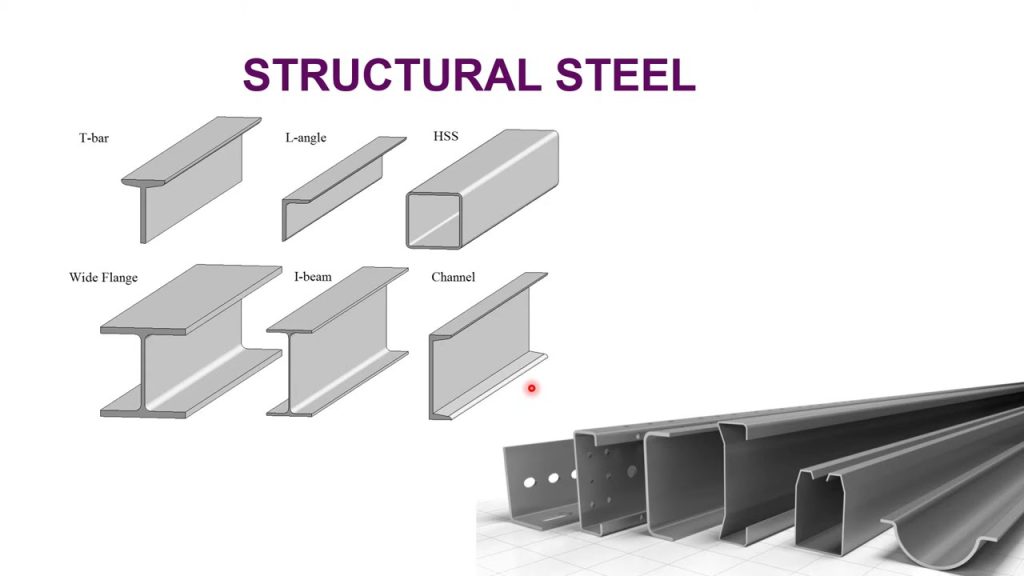
Common Structural Steel Shapes and Sections
Structural steel is manufactured in a variety of shapes to meet different construction needs. These shapes allow engineers to design efficient and stable structures.
Beams and Columns
The main load-bearing components of a structure are its beams and columns. Columns are vertical supports that transfer loads to the foundation, whereas beams are horizontal components that carry loads. I-beams and H-beams are common beam types that are frequently employed in construction projects because of their exceptional strength, stability, and structural effectiveness.
Channels and Angles
Channels and angles are commonly used for support, framing, and reinforcement in structural systems. They are often a form of secondary structural elements and bracing applications that improve overall stability. Their efficient design provides substantial support while utilizing less material, making them affordable and useful in construction projects.
Steel Plates
Steel plates are flat structural components that are utilized in many different types of construction. They are frequently used in reinforcement projects, floor systems, and base plates. Their robust and consistent surface aids in the equitable distribution of loads, offering stability and support in structural assemblies and connections.
Hollow Structural Sections (HSS)
HSS are tubular sections that can be round, square, or rectangular. They are widely used in modern construction due to their clean appearance and structural efficiency.
They are commonly used in:
- Architectural designs
- Structural frameworks
- Columns and trusses
Key Properties of Structural Steel
The performance of structural steel depends on its physical and mechanical properties. These properties make it suitable for demanding construction applications.
Strength and Load-Bearing Capacity
The high strength-to-weight ratio of structure steel, it can support heavy loads without increasing too much weight to the structure. This makes it perfect for ongoing construction projects. It is particularly crucial in high rise building, bridges, and large-span structures. Consequently, it maximizes material utilization and overall design efficiency while guaranteeing structural stability.
Ductility and Flexibility
Ductility is the capacity of steel to deform without breaking. This enables structures to withstand stress and adjust to changing loads. It contributes to the overall safety and resilience of buildings under extreme situations. It is especially crucial in areas prone to earthquakes, dynamic loads, and high wind speeds. As a result, structural steel performs reliably in challenging and unpredictable environments.
Durability and Corrosion Resistance
Structural steel is highly resilient and may last for decades with proper maintenance. Its capacity to resist corrosion increases with treatments and protective coating. It makes it suitable for seaside locations, industrial environment and outdoor structures. As a result, it ensures long-term performance and dependability under challenging circumstances.
Fire and Heat Resistance
At high temperatures, steel may lose its strength. It will neither burn completely nor will contribute to fire spread. Contrary, its fire-resistant coatings improved if exposed to fire. This makes it a safer option for structural applications in fire-prone areas.
Mechanical Behavior of Structural Steel (Under Load)
The mechanical behavior of structural steel describes how it responds to different forces and loads. It helps engineers predict performance in real construction conditions and ensures safety, stability, and reliable structural performance.
Yield strength (permanent deformation point):
The stress level at which steel begins to deform permanently and does not recover to its former shape once the load is removed. This point is crucial in structural design since it determines the material’s safe working limit.
Tensile strength (resistance to pulling forces):
The maximum stress steel can withstand while being stretched or pulled before it begins to fracture. It represents the ultimate strength of the material under tensile loading conditions.
Elasticity (returns to original shape under safe load):
Steel’s ability to restore its original shape after the applied force is removed, as long as it remains within the elastic limit. This feature ensures that the material may safely withstand temporary strains without permanently deforming.
Hardness (surface resistance to wear):
The ability of steel to withstand abrasion, scratching, and surface indentation while in use. It shows how well the material can endure deterioration and keep its surface integrity over time.
Toughness (absorbs impact energy without failure):
The ability of steel to absorb unexpected impact or energy while resisting cracking or breaking under dynamic stresses. This feature is critical for guaranteeing structural safety during unexpected or excessive loading circumstances.
Structural Steel vs Other Construction Materials
Choosing the appropriate construction material is critical in every project. Structural steel is frequently contrasted to concrete and wood, as each has unique strengths and limits. Understanding these differences helps select the most efficient option.

Structural Steel vs Concrete
Structural steel is known for its high strength-to-weight ratio, which allows it to carry heavy loads without adding excessive weight to the structure. It also enables faster construction due to prefabrication and easy assembly on-site. In comparison, concrete offers excellent compressive strength but is heavier and takes longer to cure. While concrete performs well in foundations and slabs, structural steel is preferred for high-rise buildings, long-span structures, and projects requiring speed and flexibility.
Structural Steel vs Wood
Wood is a traditional construction material that is lightweight and easy to work with, but it has limitations in terms of strength, durability, and fire resistance. Structural steel, on the other hand, provides much higher load-bearing capacity and better long-term performance. It is also resistant to pests, decay, and environmental damage when properly protected, making it more suitable for large-scale and modern construction projects.
Uses of Structural Steel in Construction Projects
Structural steel is used across a wide range of construction projects due to its adaptability and performance.
Residential Buildings
In residential construction, structural steel is widely used for framing, support beams, and structural reinforcement. It provides strong and stable support for various parts of the building. This material helps create safe and durable home structures. It also allows architects to design open floor plans and modern living spaces with fewer interior columns. As a result, residential buildings become more flexible, spacious, and structurally efficient.
Commercial Structures
Commercial buildings rely heavily on structural steel for:
- High-rise construction
- Office buildings
- Shopping centers
- Hotels and hospitality buildings
- Mixed-use commercial complexes
- Educational and institutional buildings
Its strength enables large spaces without the need for many support columns.
Industrial Facilities
Industrial projects often use structural steel because of its ability to handle heavy machinery and harsh conditions. It provides the strength and durability required for demanding industrial environments. It is commonly used in factories, warehouses, and power plants. This makes industrial structures safer, more stable, and long-lasting under continuous operational loads.
Infrastructure Projects
Structural steel is essential for infrastructure such as:
- Bridges
- Airports
- Rail systems
- Highways and overpasses
- Tunnels and underground structures
- Seaports and marine infrastructure
Its durability and strength make it ideal for large-scale projects.
Importance of Structural Steel Detailing and BIM Modeling
While choosing the right type of steel is important, accurate detailing and modeling are equally critical for project success.
What Is Structural Steel Detailing?
Structural steel detailing entails producing precise drawings and designs for steel components. These designs guide production and installation, ensuring that every component fits correctly. It ensures clarity in construction by outlining all structural requirements in advance. These drawings include dimensions, connections, and material specifications. As a result, fabrication becomes more accurate and on-site installation more efficient.
Role of BIM in Steel Construction
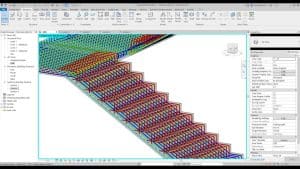
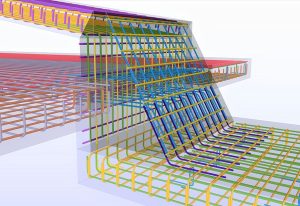
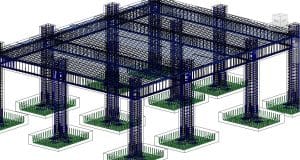
Building Information Modeling (BIM) allows engineers and designers to create 3D models of structures before construction begins.
This helps in:
- Visualizing the entire project
- Identifying potential issues early
- Improving communication between teams
- Enhancing design accuracy and coordination
- Reducing rework and construction delays
Clash Detection and Coordination
Clash detection is a vital component of BIM. It detects conflicts between various building systems, including steel structures and mechanical components. Resolving these conflicts early on improves project efficiency and cooperation. It minimizes construction delays, cost overruns, and wasteful rework. As a result, the entire construction process becomes more efficient and reliable.
Benefits of 3D Modeling in Steel Projects
3D modeling enhances accuracy and efficiency by presenting a clear representation of the structure. It enables teams to plan more effectively and execute projects easily. It also aids in detecting design flaws before building begins. As a result, it eliminates errors while increasing overall project quality and coordination.
Advantages of Using Structural Steel
Structural steel offers several advantages that make it a preferred material in construction.
High Strength-to-Weight Ratio
Steel provides excellent strength without adding excessive weight, making it ideal for large and complex structures. It allows engineers to design taller and more open spaces without compromising safety. This high strength-to-weight ratio also helps reduce the overall load on foundations. As a result, it improves structural efficiency and performance in various construction projects.
Faster Construction Process
Prefabricated steel components can be quickly assembled on-site, reducing construction time significantly. This helps speed up project completion and improves overall workflow efficiency. It also minimizes on-site labor requirements, making the construction process more streamlined. As a result, projects can be delivered faster with fewer delays and improved coordination.
Cost Efficiency
Although the initial cost may be higher, structural steel reduces long-term expenses through durability and minimal maintenance. It requires fewer repairs over its lifespan, which helps lower maintenance costs. Its long service life also adds value to the overall investment. As a result, it proves to be a cost-effective choice for many construction projects over time.
Sustainability and Recyclability
Steel is one of the most recyclable materials in the world. It can be reused without losing its properties, making it an environmentally friendly choice. This reduces the demand for new raw materials and helps conserve natural resources. It also supports sustainable construction practices by lowering environmental impact. As a result, structural steel is widely preferred in green building and eco-friendly projects.
How Professional BIM & Detailing Services Improve Steel Construction
Professional detailing and BIM services play a crucial role in enhancing the efficiency and accuracy of steel construction projects.
Improved Accuracy and Precision
Detailed models and drawings ensure that each component is manufactured and installed properly. This increases overall accuracy and lowers the likelihood of errors during production and building. It also helps teams adhere to precise standards for each structural part. As a result, projects obtain improved quality control and more efficient on-site execution.
Reduced Material Waste
Accurate planning reduces errors, cuts material waste, and saves money. It guarantees that materials are used effectively throughout the project’s lifecycle. This also helps to reduce unnecessary rework and delays on the jobsite. As a result, overall project costs are decreased and construction efficiency increases.
Better Project Coordination
BIM enables all stakeholders to collaborate on a single platform, increasing coordination and communication. This guarantees that architects, engineers, and contractors work together throughout the project. It helps to reduce misunderstandings and design clashes in the early stages. As a result, project execution becomes more streamlined and efficient.
Faster Project Delivery
Projects can be completed more quickly and efficiently if errors are reduced and planning is improved. This lowers construction delays and enhances overall workflow management. It also helps teams stay on track and meet project deadlines more efficiently. As a result, both time and resources are used efficiently throughout the project.
Role of Structural Steel in Sustainable Construction
Structural steel supports sustainable construction due to its recyclability and long lifespan. It reduces environmental impact while improving resource efficiency.
Recyclability and Resource Efficiency
Structural steel is extremely recyclable and may be reused again without losing strength or quality. This decreases the demand for additional raw materials and promotes the efficient use of natural resources. It also helps to reduce the environmental impact of construction activities. As a result, it contributes to more sustainable and eco-friendly building practices.
Reduced Construction Waste
Prefabricated steel components help to reduce material waste during construction. This results in cleaner job sites and more effective project execution. It also increases overall resource usage while reducing wasteful cutting or rework. As a result, building is faster, more organized, and environmentally friendly.
Energy-Efficient Construction Practices
Structural steel enables speedier assembly and advanced building processes, lowering overall energy consumption during construction activities. It also increases on-site efficiency by lowering construction time and labor requirements. This leads to fewer delays and more efficient project execution. As a result, it helps to promote more sustainable and energy-efficient construction practices.
Long Service Life and Sustainability
Steel constructions are durable and long-lasting, eliminating the need for frequent repairs or replacements and promoting long-term building performance. It also improves total lifespan efficiency by ensuring structural stability over decades. This lowers maintenance expenses and resource usage during the building’s lifetime. As a result, it promotes long-term sustainability in construction projects.
Conclusion
Structural steel is still used in modern construction because of its strength, adaptability, and dependability. Its diverse range of styles, shapes, and uses make it appropriate for residential, commercial, and industrial structures, providing long-lasting and efficient structural solutions.
The true potential of structural steel is achieved through proper planning, detailing, and advanced modeling techniques. Tools like BIM and professional detailing services help improve accuracy, reduce risks, and enhance overall project performance, making them essential for successful construction outcomes.
FAQs
1. What is structural steel used for in construction?
Structural steel is used to build the framework of structures such as buildings, bridges, warehouses, and industrial facilities. It provides strength and stability, allowing structures to support heavy loads and withstand environmental forces.
2. What are the main types of structural steel?
The main types of structural steel include carbon steel, high-strength low-alloy (HSLA) steel, alloy steel, and stainless steel. Each type has different properties suited for specific construction needs.
3. Why is structural steel preferred over other materials?
Structural steel is preferred because of its high strength-to-weight ratio, durability, flexibility, and cost-effectiveness. It also allows faster construction and can be recycled, making it a sustainable option.
4. What are the common shapes of structural steel?
Common structural steel shapes include beams, columns, channels, angles, plates, and hollow structural sections (HSS). These shapes are used to create strong and stable frameworks.
5. How does BIM help in structural steel construction?
BIM (Building Information Modeling) helps by creating detailed 3D models of structures. It improves accuracy, detects clashes between systems, enhances coordination, and reduces errors during construction.