Modern bridge and infrastructure projects demand high precision, coordination, and long-term durability to withstand heavy loads, environmental exposure, and structural stress. Even small reinforcement errors can lead to delays, safety risks, and inefficiencies. From highways and tunnels to retaining walls and railway structures, engineers rely on accurate reinforcement planning to ensure structural performance throughout the project lifecycle. At Strand Consulting Corporation, this precision is a key focus in delivering reliable engineering and detailing solutions.
Rebar detailing for bridges & infrastructure is essential for preparing reinforcement drawings, bar bending schedules, and placement details that improve construction accuracy and coordination. This blog covers its importance, key components, BIM integration, challenges, and benefits for complex infrastructure projects.
Rebar Detailing and its Role in Infrastructure Construction
Rebar detailing is the process of making plans used for steel reinforcement, fabrication and field installation. These plans help builders and manufacturers make and install steel correctly. It helps engineers design a structure and then turns it into clear instructions for the construction team.
In infrastructure construction, reinforcement detailing must account for heavy structural loads, dynamic forces, environmental exposure, and long service life requirements. Even a small detailing mistake can create major structural issues, increase project costs, and delay construction schedules.
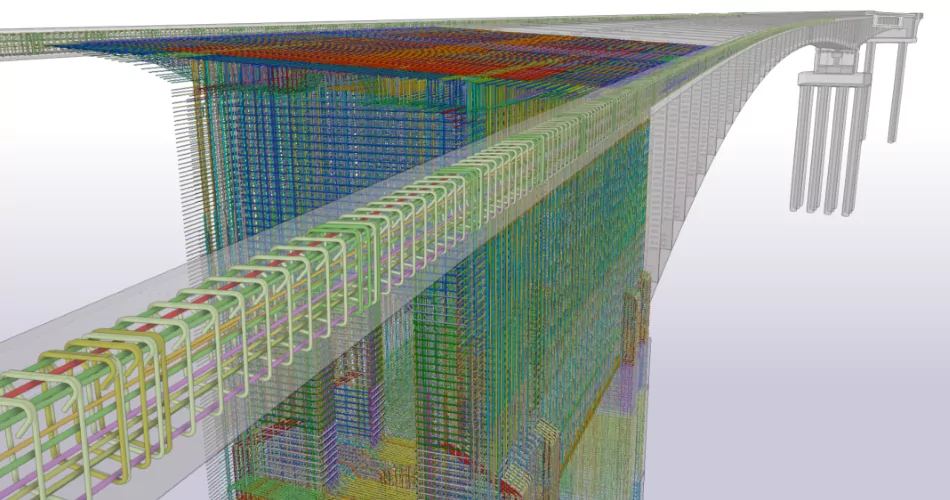
Why Rebar Detailing for Bridges & Infrastructure is Important?
Infrastructure structures experience constant stress from traffic loads, wind pressure, seismic activity, water exposure, and temperature changes. Accurate reinforcement detailing is essential to maintain structural stability and durability under these demanding conditions.
Professional rebar detailing provides several important advantages for bridge and infrastructure projects.
Improved Structural Integrity
Accurate reinforcement placement ensures that concrete structures can safely resist tension, compression, bending, and shear forces. Proper detailing improves the load-carrying capacity and long-term stability of infrastructure systems. This ultimately enhances the overall safety and durability of the structure under heavy operational conditions.
Enhanced Construction Accuracy
Detailed drawings and placement instructions help contractors install reinforcement precisely according to structural design specifications. This reduces field errors and improves construction quality. It also minimizes rework and ensures smoother on-site execution.
Reduced Material Waste
Bar bending schedules optimize reinforcement quantities and cutting lengths, minimizing unnecessary steel wastage during fabrication. This leads to more cost-effective material usage throughout the project lifecycle.
Faster Construction Process
Clear reinforcement documentation improves coordination between engineers, contractors, and fabricators, helping construction teams work more efficiently. This results in faster project completion and improved workflow management.
Better Project Coordination
Rebar detailing helps coordinate reinforcement systems with embedded elements, post-tensioning systems, utilities, and other structural components. This reduces design conflicts and ensures seamless integration of all systems.
Compliance with Industry Standards
Professional detailing ensures compliance with international and regional construction codes such as ACI, ASTM, BS, and regional infrastructure standards. It guarantees that all reinforcement work meets safety and regulatory requirements.
Key Components of Bridge Rebar Detailing
Bridge and infrastructure projects require highly detailed reinforcement documentation to support complex structural systems. Each detailing component contributes to accurate fabrication and installation.
Reinforcement Layout Drawings
Reinforcement layout drawings show the exact location, spacing, diameter, and arrangement of reinforcing bars within structural components such as:
- Bridge decks
- Piers
- Columns
- Abutments
- Footings
- Retaining walls
- Tunnel linings
Bar Bending Schedules (BBS)
Bar bending schedules provide complete information about reinforcement bars, including:
- Bar marks
- Shape codes
- Cutting lengths
- Bend dimensions
- Quantities
- Weight calculations
Reinforcement Sections & Elevations
Detailed sectional views illustrate reinforcement arrangements within critical structural areas. These sections are especially important in congested reinforcement zones where multiple bars intersect.
Splicing and Anchorage Details
Infrastructure projects often require specialized lap splice lengths, hooks, couplers, and anchorage systems to maintain reinforcement continuity and structural strength.
Rebar Placement Drawings
Placement drawings guide contractors during field installation by identifying reinforcement sequences, clear cover requirements, and construction joints.
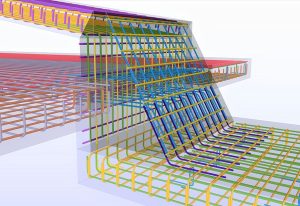
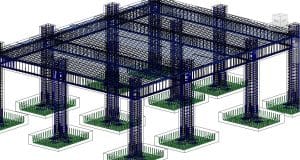
3D Rebar Modeling
Modern BIM-based 3D reinforcement models allow teams to visualize complex reinforcement systems before construction begins. This improves constructability analysis and clash detection.
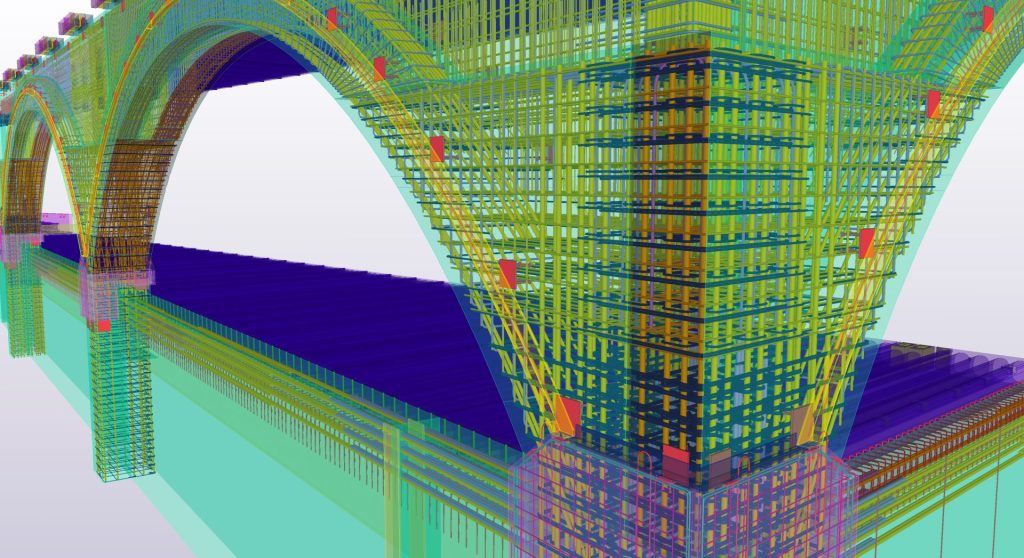
Role of BIM in Infrastructure Rebar Detailing
Building Information Modeling (BIM) has transformed the way infrastructure reinforcement systems are detailed and coordinated. BIM-based rebar detailing improves communication between project stakeholders while reducing errors and construction conflicts.
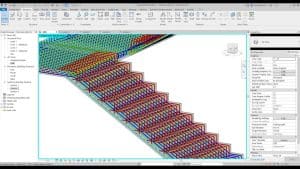
Using advanced BIM software such as Tekla Structures and Autodesk Revit, detailers can create intelligent 3D reinforcement models that accurately represent structural reinforcement systems.
Benefits of BIM-Based Rebar Detailing
Improved Clash Detection
3D modeling helps identify conflicts between reinforcement bars, embedded components, utilities, and structural systems before construction begins. This prevents costly on-site modifications and delays during execution.
Better Visualization
Contractors and engineers can visualize reinforcement placement clearly, making complex structures easier to understand and construct. This improves decision-making and reduces ambiguity in field execution.
Accurate Quantity Estimation
BIM models generate precise reinforcement quantities that improve cost estimation and procurement planning. This helps optimize material usage and reduces unnecessary steel wastage.
Enhanced Coordination
All project stakeholders can collaborate using coordinated digital models, improving communication and reducing design inconsistencies. This ensures smoother project execution across all disciplines.
Faster Project Delivery
Early detection of detailing issues minimizes rework and accelerates construction schedules. As a result, projects are completed more efficiently with reduced downtime.
Common Challenges in Bridge Rebar Detailing
Bridge and infrastructure projects involve unique detailing challenges that require extensive technical expertise and coordination.
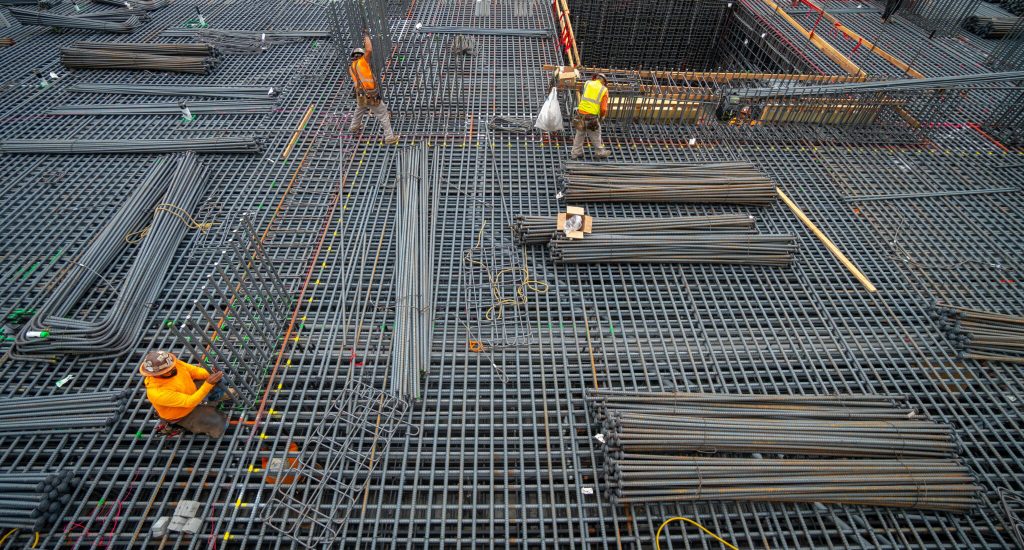
Reinforcement Congestion
Bridge piers and beam-column joints and seismic zones have a lot of reinforcement that’s really hard to work with. This makes it tough to put the bars in the place. Detailers have to figure out a way to arrange the bars so that they can actually be built. They have to do this while still making sure the structure is safe and strong.
Complex Structural Geometry
Curved bridges, inclined columns, and irregular infrastructure shapes require advanced detailing techniques and precise reinforcement coordination. Accurate modeling and visualization help prevent placement conflicts and ensure smooth construction execution.
Seismic Reinforcement Requirements
Infrastructure structures in earthquake zones need reinforcement designs to handle earthquake forces. This is because proper earthquake detailing makes structures more flexible, stable and safer. It helps to improve how structures behave when hit by an earthquake. Specialized reinforcement configurations and earthquake detailing are crucial, for infrastructure structures located in earthquake zones.
Large-Scale Coordination
Infrastructure projects involve areas of expertise. These include engineering, MEP systems, utilities, precast systems and post-tensioning components. Coordinating all these systems can be very complicated. They need proper planning to work well together.
Compliance with Regional Codes
Different regions have rules for reinforcement standards and detailing requirements. Detailers must make sure they follow all the rules that apply to them. If the detailers follow the rules of their industry they can help keep the construction work safe and make sure it gets approved.
Construction Sequencing
Bridge construction often occurs in phases. Reinforcement detailing must account for staged construction methods and temporary support systems. Proper sequencing improves workflow management and reduces delays during on-site installation.
Types of Infrastructure Projects Requiring Rebar Detailing
Professional rebar detailing services are essential across a wide range of infrastructure sectors.
Highway Bridges
Highway bridge projects require reinforcement detailing for decks, girders, piers, diaphragms, abutments, and foundations.
Railway Infrastructure
Railway bridges and elevated rail systems require reinforcement capable of handling dynamic train loads and vibration forces.
Tunnels
Tunnel reinforcement detailing involves curved geometries, retaining systems, waterproofing coordination, and heavy reinforcement zones.
Retaining Walls
Infrastructure retaining structures require carefully detailed reinforcement to resist soil pressure and lateral forces.
Water Treatment Facilities
Water infrastructure projects require corrosion-resistant reinforcement systems designed for moisture exposure and chemical environments.
Marine Structures
Ports, docks, and coastal infrastructure require specialized detailing solutions that address saltwater exposure and corrosion resistance.
Airport Infrastructure
Airport runways, terminals, and support structures rely on heavy-duty reinforcement systems designed for large dynamic loads.
Importance of Constructability in Rebar Detailing
Constructability is one of the most important aspects of infrastructure reinforcement detailing because even a structurally correct design can create field installation challenges if it is not detailed properly. Professional detailers carefully consider factors such as bar placement accessibility, reinforcement spacing, concrete pouring requirements, worker installation safety, fabrication limitations, crane and lifting requirements, and construction sequencing during the detailing process. By focusing on constructability, detailing becomes more practical for on-site execution, helping reduce delays, avoid installation issues, and improve overall project efficiency.
Rebar Detailing Standards and Codes
Bridge and infrastructure detailing must comply with strict engineering standards and construction regulations.
Some commonly used standards include:
- ACI (American Concrete Institute)
- ASTM Standards
- BS 8666
- CRSI Standards
- Eurocodes
- AASHTO Bridge Design Specifications
Advanced Software Used in Rebar Detailing
Modern infrastructure detailing relies heavily on advanced software platforms that improve precision and project coordination.
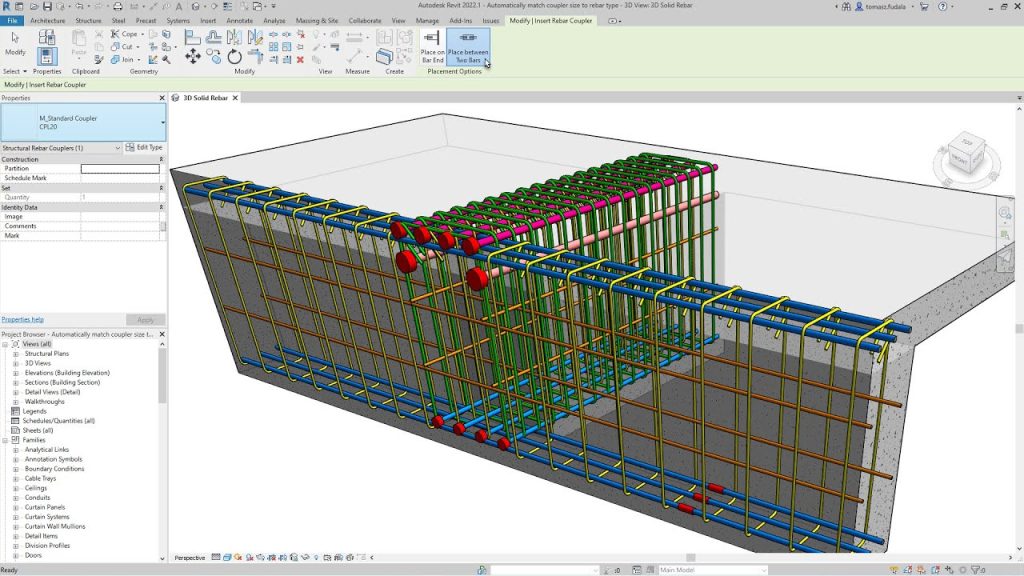
Tekla Structures
Tekla is widely used for complex infrastructure reinforcement detailing and BIM coordination. It supports highly detailed 3D reinforcement modeling and automated drawing generation.
Autodesk Revit
Revit allows integrated BIM workflows for structural coordination and reinforcement visualization.
AutoCAD
AutoCAD remains an important tool for preparing 2D reinforcement drawings and detailing documentation.
Navisworks
Navisworks supports clash detection and project coordination between structural, architectural, and MEP systems.
Benefits of Outsourcing Rebar Detailing Services
Many contractors and engineering firms outsource rebar detailing services to specialized detailing companies in order to improve efficiency and reduce project costs.
1: Access to Skilled Detailers
Professional detailing firms employ experienced structural detailers familiar with international infrastructure standards. This ensures high-quality output that meets global engineering and construction requirements.
2: Cost Savings
Outsourcing eliminates the need for maintaining large in-house detailing teams and software infrastructure. It also reduces training, licensing, and operational overhead costs significantly.
3: Faster Turnaround Times
Dedicated detailing teams can deliver drawings and schedules more quickly, helping projects stay on schedule. This improves workflow efficiency and supports tight construction deadlines.
4: Improved Accuracy
Experienced detailers reduce the risk of costly field errors and fabrication mistakes. Their expertise ensures precise reinforcement placement and better coordination with structural designs.
5: Scalable Support
Outsourcing provides flexibility for handling projects of different sizes and complexity levels. It allows firms to easily scale resources up or down based on project demand and timelines.
Future of Rebar Detailing in Infrastructure Construction
The infrastructure industry is rapidly evolving with the adoption of digital construction technologies, automation, and intelligent modeling systems.
AI-Assisted Detailing Workflows
Rebar detailing is a lot easier with Artificial intelligence. This technology helps with tasks, like making reinforcement layouts and detecting errors. It also helps figure out the way to arrange the bars. Artificial intelligence makes rebar detailing faster and more accurate. It saves a lot of time and work. Complex infrastructure projects can be finished sooner with this technology.
Cloud-Based BIM Collaboration
Cloud-based BIM collaboration is really helpful for engineers, detailers and contractors. They can all work on the model at the same time from different places. It helps everyone work together better, reduces mistakes that took place due to communication gaps. It makes sure that everyone working on the project has the latest design information for Cloud-based BIM collaboration.
Digital Twin Technology in Construction
Digital twin technology makes a copy of a real building or structure. This virtual copy can be used to see how the building will work, monitor, and analyze construction performance. When it comes to making plans for the steel bars inside the concrete, digital twin technology really helps. It shows how the building will behave when it is finished which makes it easier to plan and make choices while the project is going on.
Robotics-Assisted Reinforcement Fabrication
Robotics-assisted fabrication uses automated machines to cut, bend, and assemble reinforcement steel with high precision. This improves production speed, reduces human error, and ensures consistent quality in large-scale infrastructure projects.
Conclusion
Rebar detailing is essential for the successful construction of bridges and infrastructure projects. Accurate reinforcement drawings, bar bending schedules, and BIM coordination help improve construction accuracy, reduce delays, and ensure long-term structural performance. At Strand Consulting Corporation in Dallas, Texas, this precision-driven approach ensures every project meets high standards of quality and reliability.
With increasing project complexity in modern infrastructure development, professional rebar detailing services provide the precision and coordination needed to deliver safe, durable, and cost-effective construction solutions.
FAQs
1. What is rebar detailing in bridges and infrastructure projects?
Rebar detailing is the process of creating detailed drawings, bar bending schedules, and reinforcement placement instructions that guide the fabrication and installation of steel reinforcement in bridges and infrastructure structures.
2. Why is rebar detailing important for infrastructure projects?
It ensures structural accuracy, reduces construction errors, improves coordination between teams, minimizes material waste, and helps deliver safe and durable infrastructure projects.
3. What documents are included in rebar detailing?
Rebar detailing typically includes reinforcement drawings, bar bending schedules (BBS), placement details, section drawings, and sometimes 3D BIM reinforcement models.
4. How does BIM improve rebar detailing for bridges?
BIM improves coordination, detects clashes, enables 3D visualization, provides accurate quantity estimation, and helps different stakeholders work on a shared digital model in real time.
5. What are the main challenges in bridge rebar detailing?
Challenges include complex geometries, reinforcement congestion, seismic design requirements, multi-disciplinary coordination, and compliance with different construction codes.
6. What is a bar bending schedule (BBS)?
A bar bending schedule is a detailed list that shows reinforcement bar shapes, sizes, lengths, quantities, and bending details required for fabrication.