

A small change in a rebar drawing can create major problems during construction. For example, an engineer may update a reinforcement detail, but the fabricator might still be working with an older bar list. As a result, the team could produce incorrect bars, waste materials, and delay installation.
Rebar revision management helps construction teams prevent these problems by keeping shop drawings, bar bending schedules, and fabrication records updated. It ensures that detailers, fabricators, and site crews work with the correct project information.
However, managing revisions requires more than changing a drawing number. Every update must be checked, recorded, and shared with the responsible teams. This guide explains how to control rebar drawing revisions, maintain accurate bar lists, and reduce costly fabrication errors.
Introduction to Rebar Revision Management
Rebar revision management is the process of tracking and controlling changes to reinforcement drawings, bar schedules, and fabrication documents. It helps construction teams maintain accurate information throughout detailing, production, and installation.
A revision may change bar sizes, lengths, quantities, or placement details. Therefore, updating the drawing alone is not enough. The related bar bending schedules and fabrication records must also reflect the latest authorized changes.
Proper revision control reduces confusion, prevents incorrect fabrication, and improves communication between project teams.
Why Revision Control Matters in Rebar Detailing
Rebar projects often involve many drawings, bar marks, and fabrication packages. Even one missed update can affect several construction activities.
For example, a revised slab opening may change the lengths and positions of nearby reinforcement. If the fabricator uses the previous schedule, the bars may no longer match the required layout.
Effective rebar detailing revision control helps teams identify these differences before they become expensive site problems.
Common Causes of Rebar Shop Drawing Revisions
Rebar shop drawings may change during different stages of construction. Some revisions come from updated structural designs, while others result from site conditions or coordination requirements.
The most common causes include:
- Structural Design Changes: Engineers may revise bar sizes, spacing, or reinforcement arrangements.
- RFI Responses: Clarifications may require updates to drawings and bar schedules.
- Construction Joint Changes: Approved changes to joint locations can affect reinforcement connections.
- Openings and Embedments: New or modified openings may change nearby reinforcement.
- Coordination Conflicts: Reinforcement may interfere with embedded plates, sleeves, or other building elements.
- Site Conditions: Field measurements or installation challenges may require further design review.
- Construction Sequence Changes: Revised pour arrangements can affect detailing and fabrication packages.
Even a small design change may affect several documents. Therefore, detailers should review the full impact before issuing revised information.
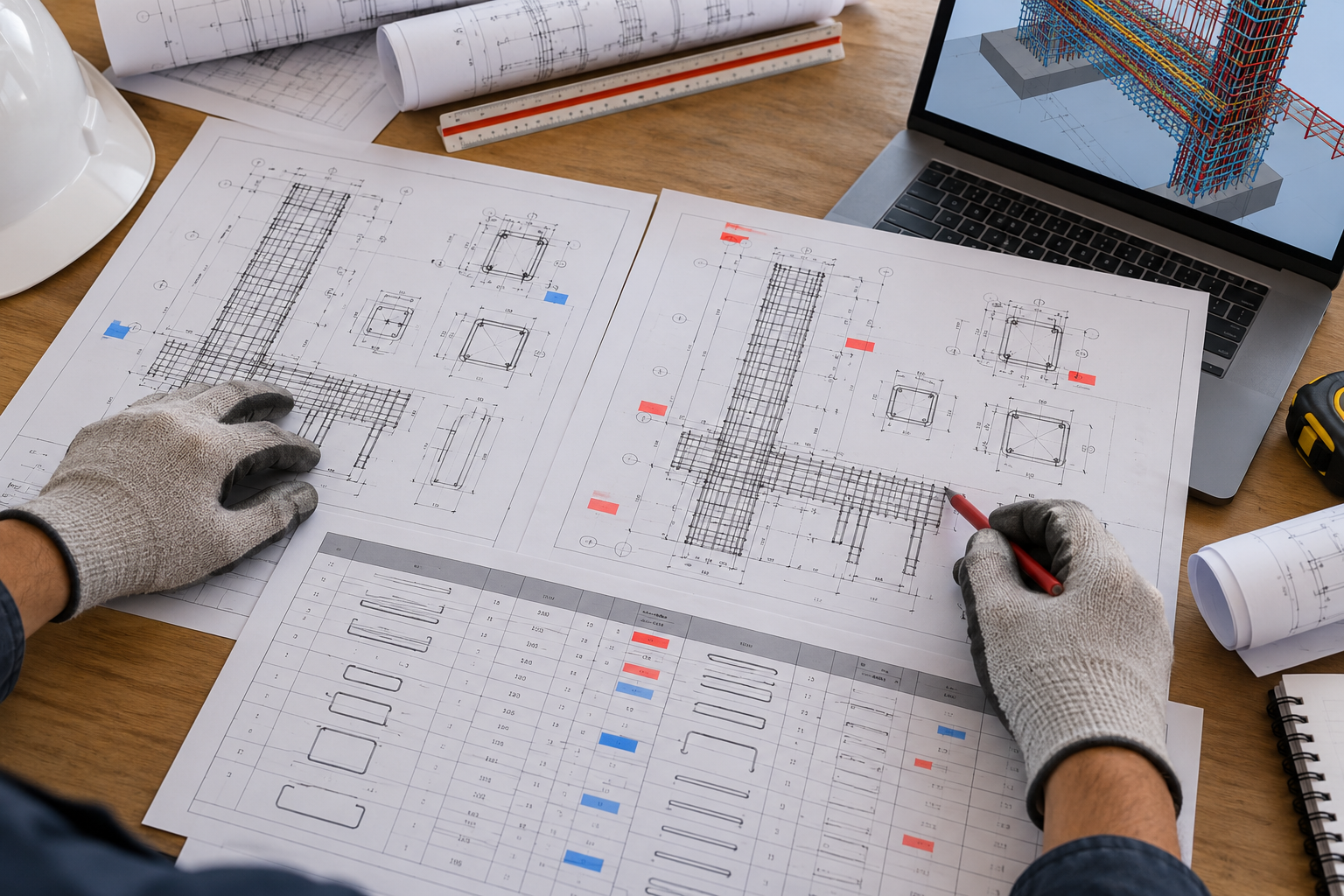
Step-by-Step Rebar Drawing Revision Control Process
A clear rebar drawing revision control process helps contractors and fabricators manage updates without losing track of previous information.
Each revision should move through identification, impact review, document updates, checking, authorization, and controlled distribution.
Step 1: Record the Latest Drawing Revision
When a new revision arrives, the detailing team should record its number, date, and source. Then, compare it with the previous version and update the revision register to track changes and outdated drawings.
Step 2: Identify Affected Drawings and Bar Marks
After recording a revision, detailers should identify affected reinforcement, including changes to bar lengths, sizes, or positions. Reviewing related drawings and bar schedules helps prevent outdated information and detailing errors.
Step 3: Update and Verify Revised Documents
Update affected drawings, bar bending schedules, and records after identifying changes. Check dimensions, quantities, and bar marks for accuracy before submitting the revised package for approval and fabrication.
Step 4: Distribute the Latest Authorized Documents
After approval, share revised drawings with contractors, fabricators, and site teams. Remove outdated documents to prevent errors and maintain consistency. For more details, see Strand’s rebar submittal workflow.
Keeping Bar Bending Schedules and Drawings Consistent
A bar bending schedule (BBS) provides the information needed to cut and bend reinforcement. It normally includes bar marks, sizes, lengths, shapes, bending dimensions, and quantities.
Verify Bar Marks, Shapes, Lengths, and Quantities
Start by comparing the revised placing drawings with their related bar schedules. Check whether any bar sizes, shapes, dimensions, or quantities have changed.
For example, a revised slab opening may require shorter bars or additional reinforcement around the opening.
Update Bar Lists After Design Changes
Bar lists should match the latest authorized drawings and the project’s agreed bar-marking system.
If a revision changes a bar’s fabrication requirements, the detailer must update the affected records and clearly identify the revised information.
For example:
| Bar Mark | Original Information | Revised Information | Action |
|---|---|---|---|
| B101 | 12 bars, 5,000 mm | 12 bars, 4,800 mm | Update length |
| B102 | 8 bars | 10 bars | Update quantity |
| B103 | Shape A | Shape B | Update bend details |
This example is illustrative. Actual bar marks, dimensions, and shape codes depend on project requirements.
Prevent Duplicate and Outdated Bar Records
Poor rebar bar list management can lead to duplicate orders or incorrect fabrication. Therefore, teams should follow a consistent method for revising bar marks and schedules.
Superseded records should remain traceable, but they must be clearly marked so fabricators do not treat them as current production instructions.
A final drawing-to-schedule check helps confirm that the reinforcement information matches across documents.

Managing Drawing Changes During Rebar Fabrication
Drawing revisions can create problems when fabrication has already started. Rebar fabrication change management helps teams identify affected bars, control production changes, and avoid costly errors.
First, detailers should inform fabricators about revised drawings. Fabricators must then check which bars are already cut, bent, or completed to understand the impact on production.
Next, teams should hold affected fabrication work until they receive updated instructions. However, unaffected reinforcement packages can continue if project approvals allow.
Finally, authorized teams should issue revised fabrication details and confirm which bars need changes or replacement. Clear communication helps reduce material waste, prevent delays, and maintain accurate production records.
Rebar Drawing Revision Tracking and Approval Status
A rebar drawing revision register provides a central record of drawing changes, approvals, and fabrication progress.
Project managers can use it to identify which packages are ready for production and which still require attention.
For example:
| Drawing ID | Revision | Bar List Status | Fabrication Status |
|---|---|---|---|
| RB-101 | Rev 02 | Updated | Not released |
| RB-102 | Rev 03 | Under review | On hold |
| RB-103 | Rev 01 | Checked | Released |
| RB-104 | Rev 04 | Revision required | Production paused |
Example statuses only. Actual approvals and release procedures depend on the project.
A useful revision register should also identify the responsible person, revision date, affected bar marks, and approval status.
This information supports shop drawing revision tracking and helps prevent outdated documents from entering fabrication.
Common Rebar Revision Management Mistakes
Poor revision control can create confusion between detailing, fabrication, and site installation. Here are common mistakes construction teams should avoid:
- Using Outdated Drawings: Superseded documents may lead to incorrect reinforcement fabrication.
- Missing BBS Updates: Revised drawings without updated schedules can create bar quantity or dimension errors.
- Incorrect Bar Marks: Poor bar identification can cause fabrication and delivery confusion.
- Ignoring Related Drawings: A change in one structural area may affect adjacent reinforcement details.
- Delayed Communication: Fabricators may continue production before receiving updated information.
- Weak Approval Tracking: Unclear drawing status can lead to unauthorized fabrication releases.
- Missing Revision Records: Without proper documentation, teams may struggle to identify what changed.
A clear revision process helps contractors reduce these risks and maintain consistent reinforcement documentation.
Practical Example: Handling Rebar Revisions During Fabrication
Consider a commercial building where an engineer changes the size of a slab opening after rebar fabrication begins. This revision affects nearby bar lengths, quantities, and reinforcement placement.
First, the detailer compares the revised drawings with the previous version and identifies affected bar marks. The fabricator then checks which bars are already completed and holds affected production until the changes are reviewed.
Finally, the team updates the bar bending schedules and issues revised fabrication instructions after approval. This helps prevent incorrect reinforcement, reduce material waste, and avoid construction delays.
The Role of Professional Rebar Detailing in Revision Control
Accurate rebar revision management requires clear drawings, consistent bar schedules, and reliable communication between project teams. Without these controls, even small design changes can lead to fabrication errors and construction delays.
Professional rebar detailing services help contractors and fabricators maintain organized reinforcement documentation. Detailers can identify affected bars, update placing drawings, and coordinate bar bending schedules with revised project requirements.
In addition, experienced detailing teams can help track drawing revisions, manage package updates, and prepare clear information for fabrication. This makes it easier for project managers to review changes and coordinate upcoming work.
Strand Consulting Corporation provides rebar detailing and related construction support services for contractors, engineers, and fabricators. Its services support the preparation of reinforcement drawings, bar schedules, and coordinated project documentation.
Conclusion
Effective rebar revision management keeps reinforcement drawings, bar bending schedules, and fabrication information aligned throughout construction.
By tracking design changes, updating affected bar marks, and controlling fabrication releases, project teams can reduce errors, material waste, and delays.
Clear communication between detailers, fabricators, and site crews also helps ensure that everyone works from the latest authorized information.
For contractors and fabricators managing complex reinforcement projects, Strand Consulting Corporation provides rebar detailing support to help maintain accurate and coordinated construction documentation.
Need support with rebar shop drawings or revision coordination? Contact Strand Consulting Corporation to discuss your project requirements.
Frequently Asked Questions
How do you manage revisions in rebar shop drawings?
Start by recording the latest revision and identifying the affected reinforcement. Then update related drawings and bar schedules, complete the required checks, and distribute authorized documents to the relevant teams.
Does every drawing revision require a new bar bending schedule?
Not necessarily. A revision that does not affect reinforcement may not require changes to the bar bending schedule. However, any change affecting bar marks, sizes, lengths, shapes, or quantities should be checked and reflected in the appropriate records.
What happens if rebar is already fabricated before a revision?
The team should identify the affected bars and review the change with the responsible parties. Depending on the revised requirements, the bars may need replacement, modification under approved instructions, or further technical review.
Who approves revised rebar shop drawings?
Approval responsibilities depend on the project contract and review procedures. The contractor, structural engineer, engineer of record, or another authorized party may be involved in reviewing and approving revised reinforcement information.
How can fabricators avoid using outdated bar lists?
Fabricators should use controlled document registers, verify revision identifiers, and confirm the authorized fabrication package before production. They should also remove superseded lists from active production use.